
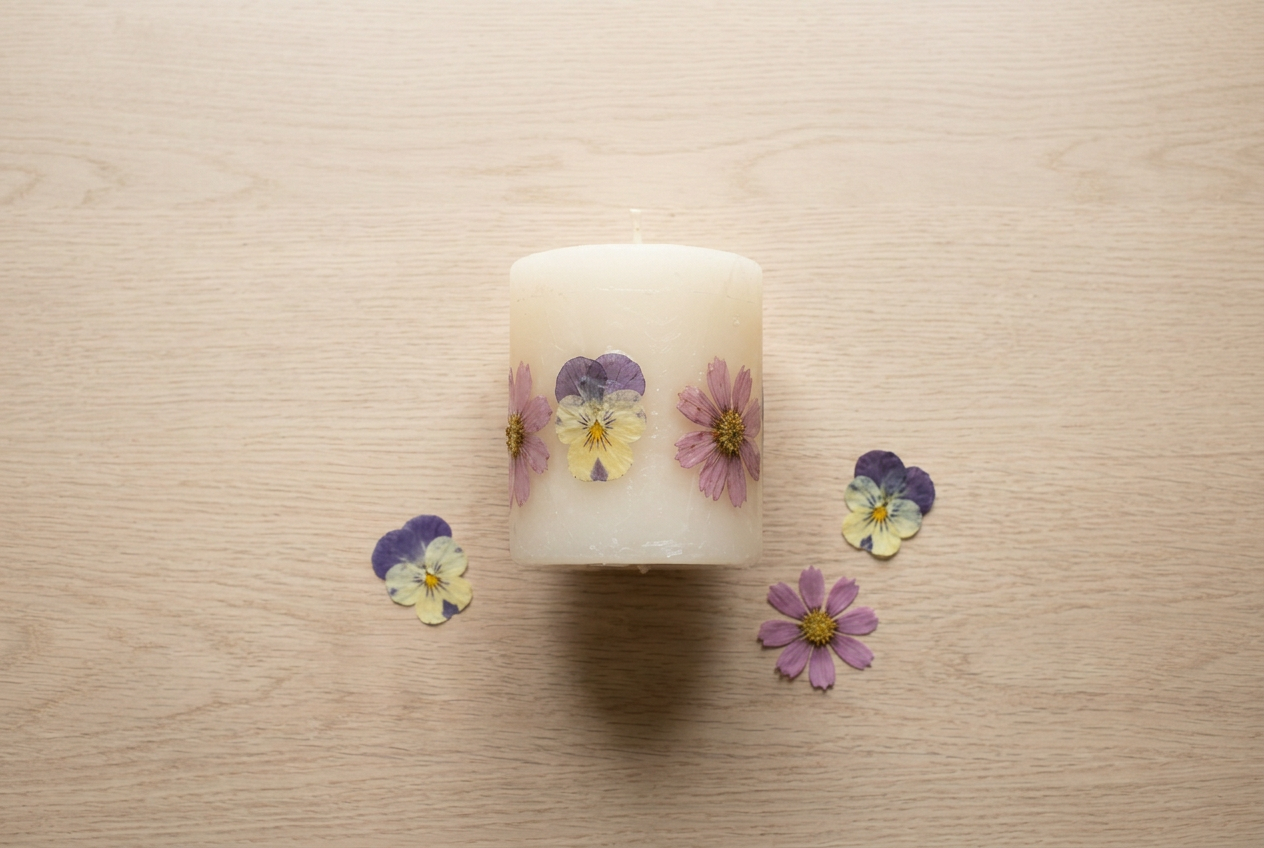
A pressed flower candle is made by melting the outer skin of a plain pillar candle over a flat pressed flower, using a warm spoon and a sheet of baking parchment. Keep every flower in the lower two thirds, and burn it inside a glass hurricane or not at all.
A pressed flower candle is fifteen minutes of work and one genuinely important safety decision. The flowers are fixed to the outside of a pillar candle under a thin skin of melted wax, which looks beautiful and is flammable.
Keep every flower well below the burn line, or treat the candle as decoration and light it inside a glass hurricane. Both are honest answers; pretending a dried petal near a flame is fine is not.
The pressed flowers hub covers the pressing itself, and this is one of the better uses for the slightly imperfect ones.
Materials
- A plain unscented pillar candle
- Flat pressed flowers
- Plain baking parchment
- Hot water
Tools
- Fine tweezers
- A metal dessert spoon
- A jug of hot water
- Soft dry brush
- A glass hurricane, for burning
Fifteen minutes a candle, with no drying time at all.
How do you make a pressed flower candle?
Lay a flat pressed flower against a plain pillar candle, hold a piece of baking parchment over it, and press a spoon heated in hot water through the parchment until the surface wax melts and closes over the petals.
1Set out what you need
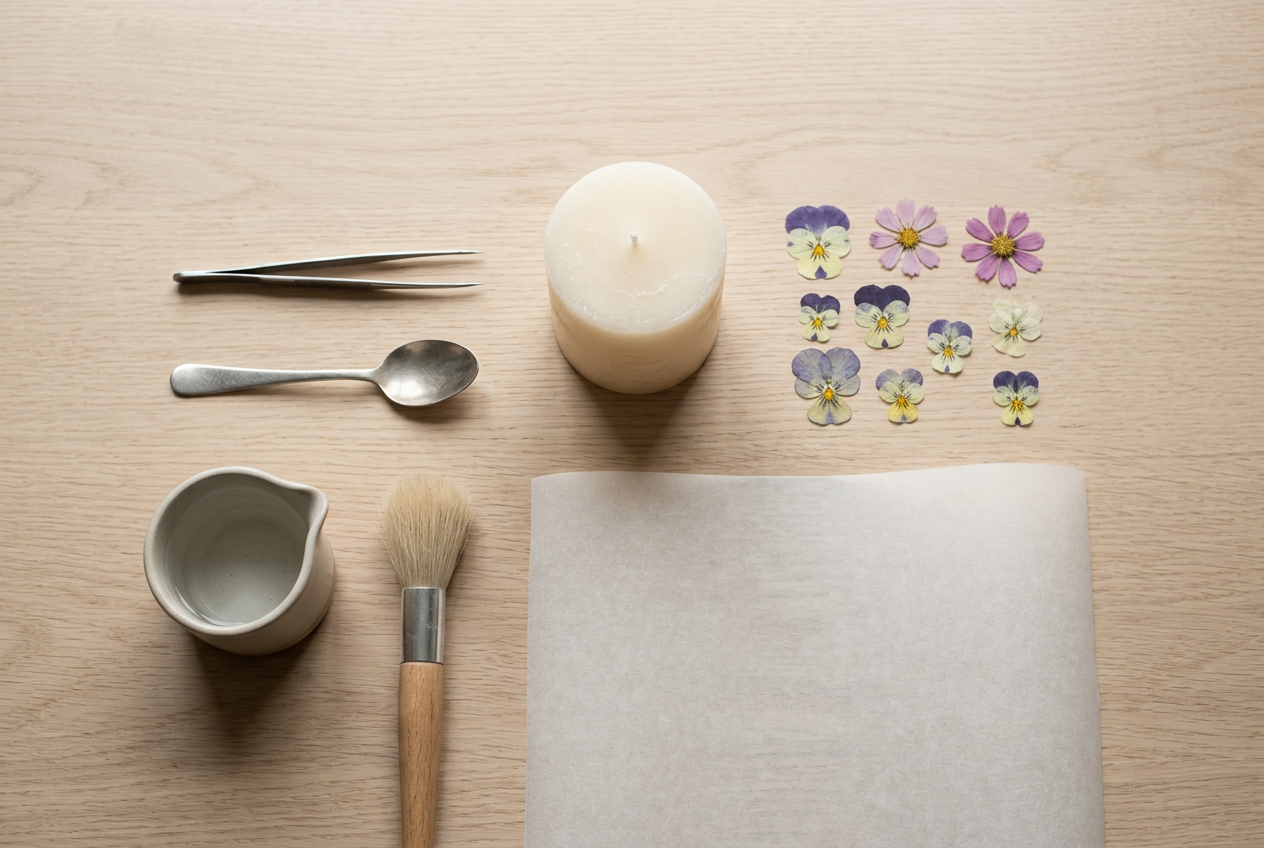
A pillar candle rather than a container candle. The whole method depends on melting the outer skin of wax, and there is no outer skin on a candle in a jar.
Plain and unscented is worth choosing. Heavily scented waxes are softer and slump under the spoon, and a textured or ribbed surface will not take a flower flat.
2Choose the flattest flowers
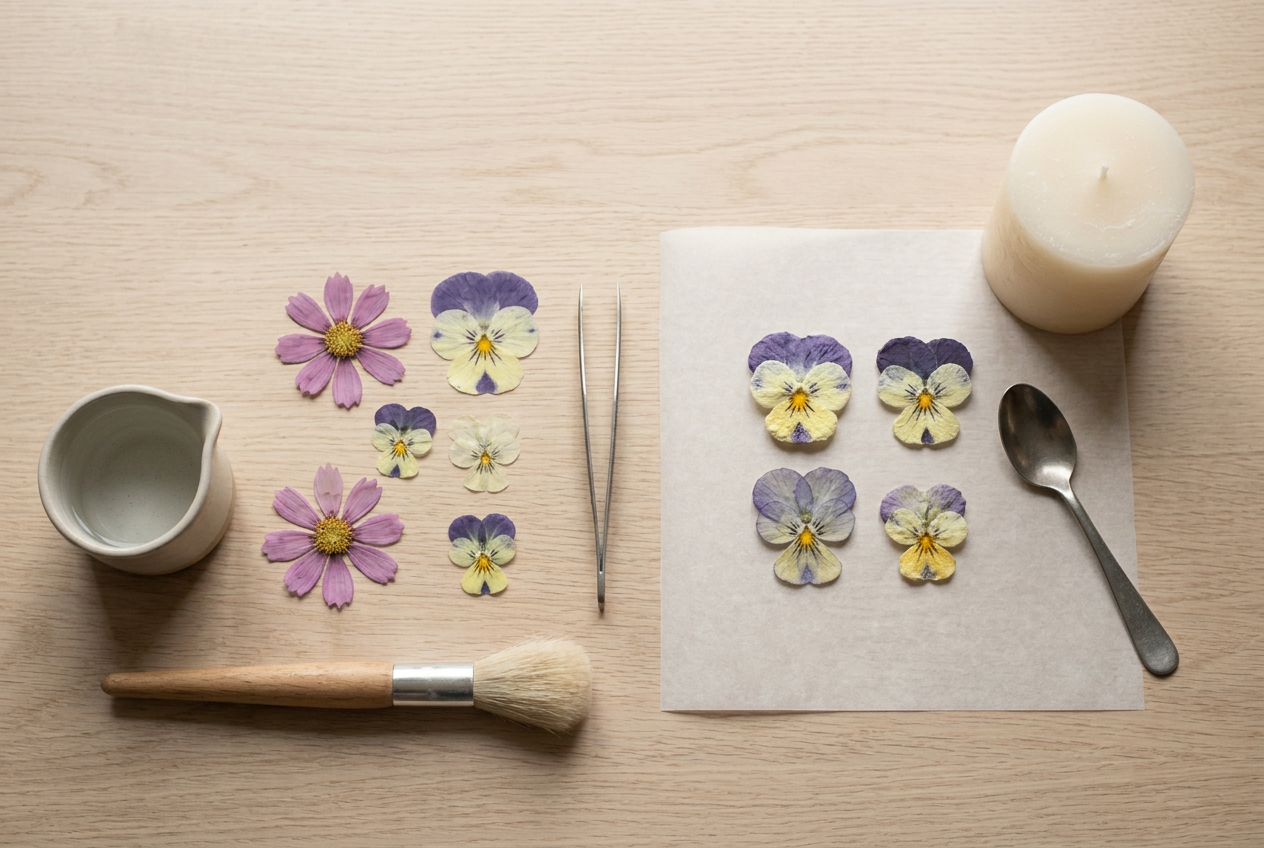
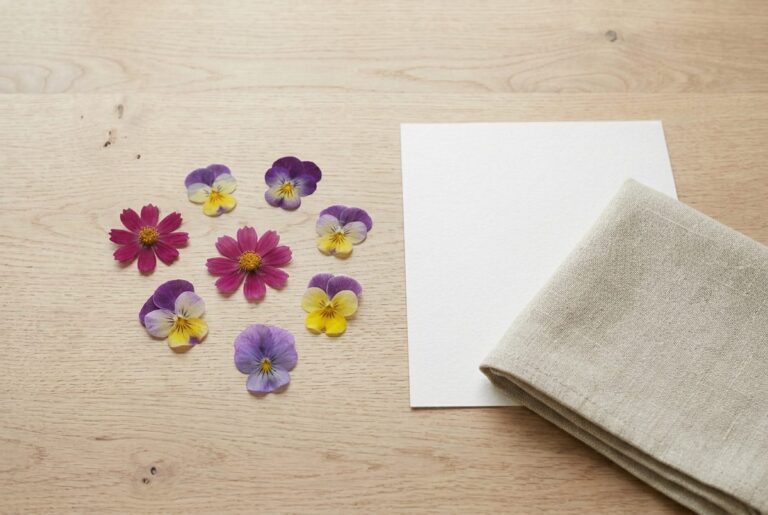
Flat is the only requirement that really matters. A flower with a raised centre traps air under the wax and lifts at the edges within a day.
Violas, cosmos, larkspur and single-petal daisies work beautifully. Roses, carnations and anything with a fleshy middle do not, even when pressed hard.
Sort them before you start and put the thick ones aside for a frame instead. Discovering it halfway through means peeling a flower off warm wax, which never comes away in one piece.
3Position the flower on the candle
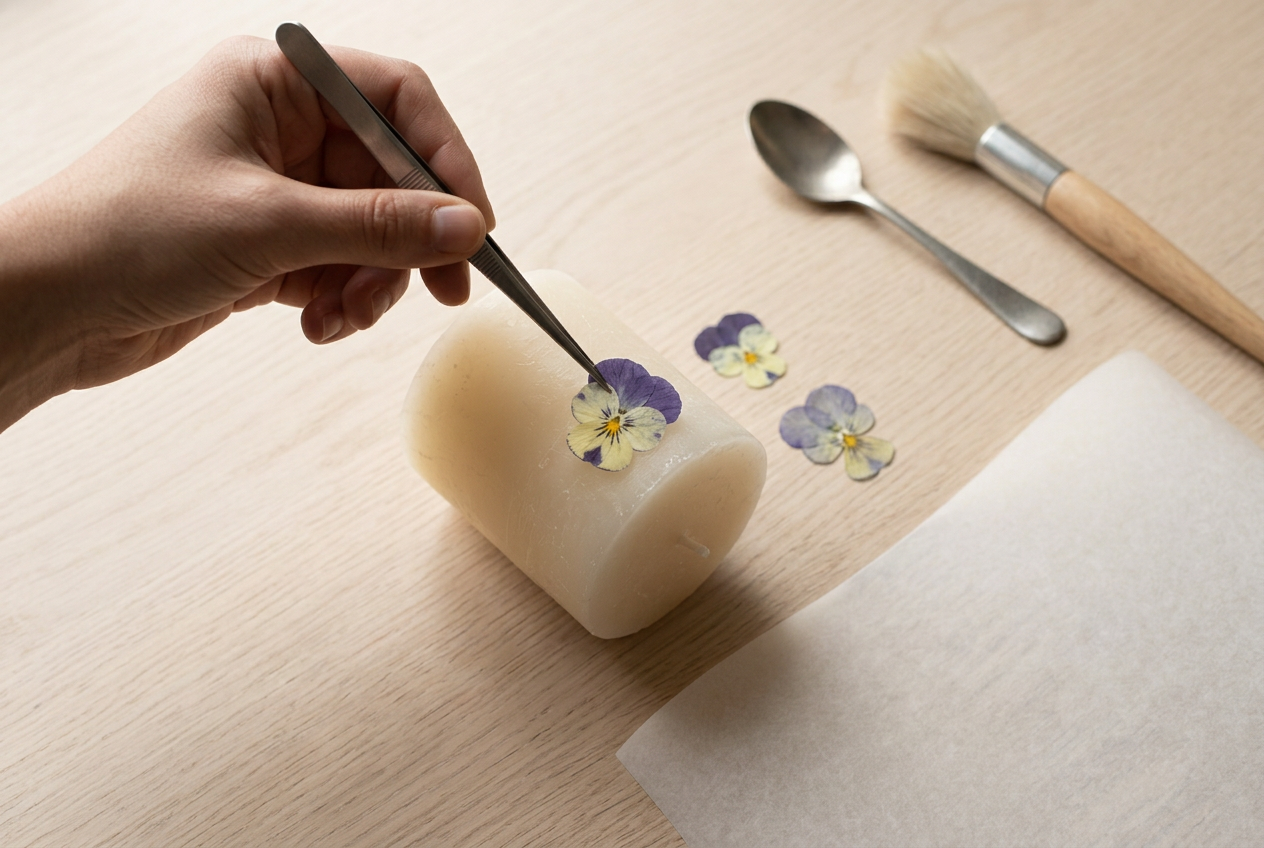
Lay the candle on its side and place the flower with tweezers. Fingers leave marks in soft wax and warm the petals until they curl.
Keep everything in the lower two thirds. As the candle burns down the flame drops, and a flower in the top third will be sitting right beside it within an hour of burning.
Plan the whole arrangement before any heat is applied. Once the wax has closed over a petal it is fixed, and moving it takes the surface with it.
4Press through baking parchment
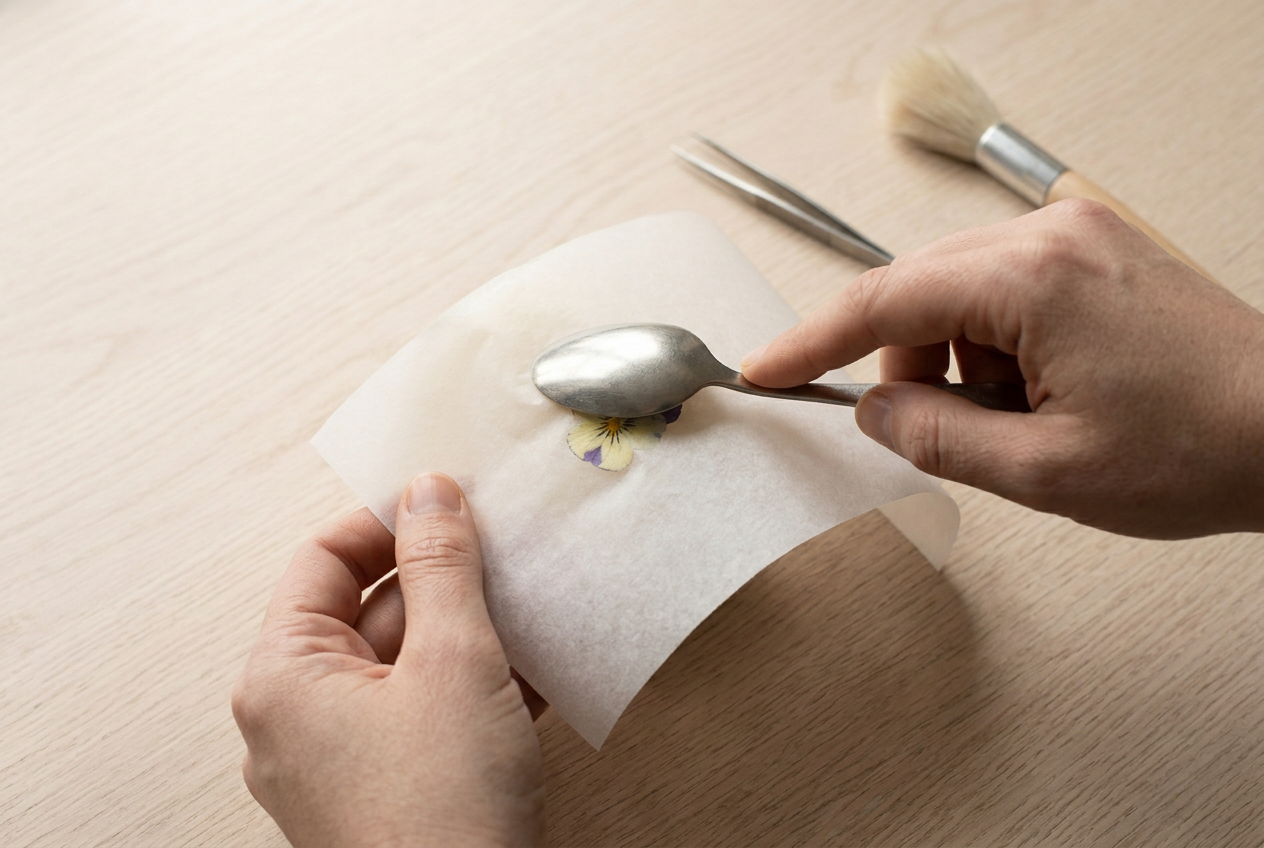
Warm the back of a spoon in hot water for twenty seconds, dry it, then press and hold it over the parchment for a slow count of five.
The parchment is what makes this work. It keeps the spoon off the petals, spreads the heat evenly, and lifts away cleanly from wax as it cools.
Work outwards from the middle of the flower so any trapped air is pushed to the edges rather than sealed under a petal.
Reheat the spoon for each flower. A cooling spoon presses the flower into the wax without melting it, which looks fine for a day and then peels.
5Peel the parchment and check the seal
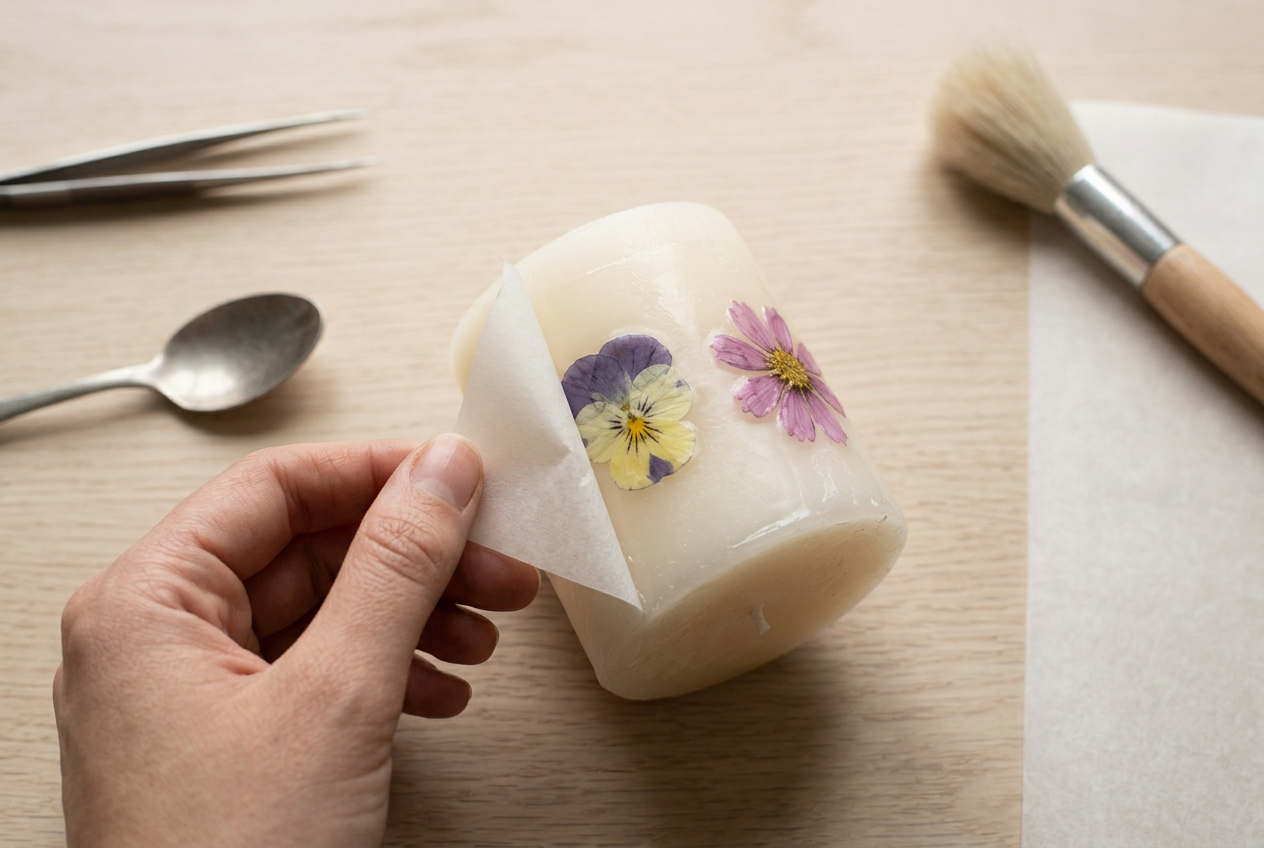
Wait a few seconds for the wax to go from glossy to matt, then peel the parchment back slowly from one corner.
Look along the surface in raking light. A sealed flower sits under a smooth film with no raised edges; an unsealed one shows a lifted petal tip that will catch on a sleeve and tear.
Any edge that is standing proud gets the spoon again through fresh parchment. There is no limit to how many times you can reheat one spot.
6Trim the wick and burn it safely
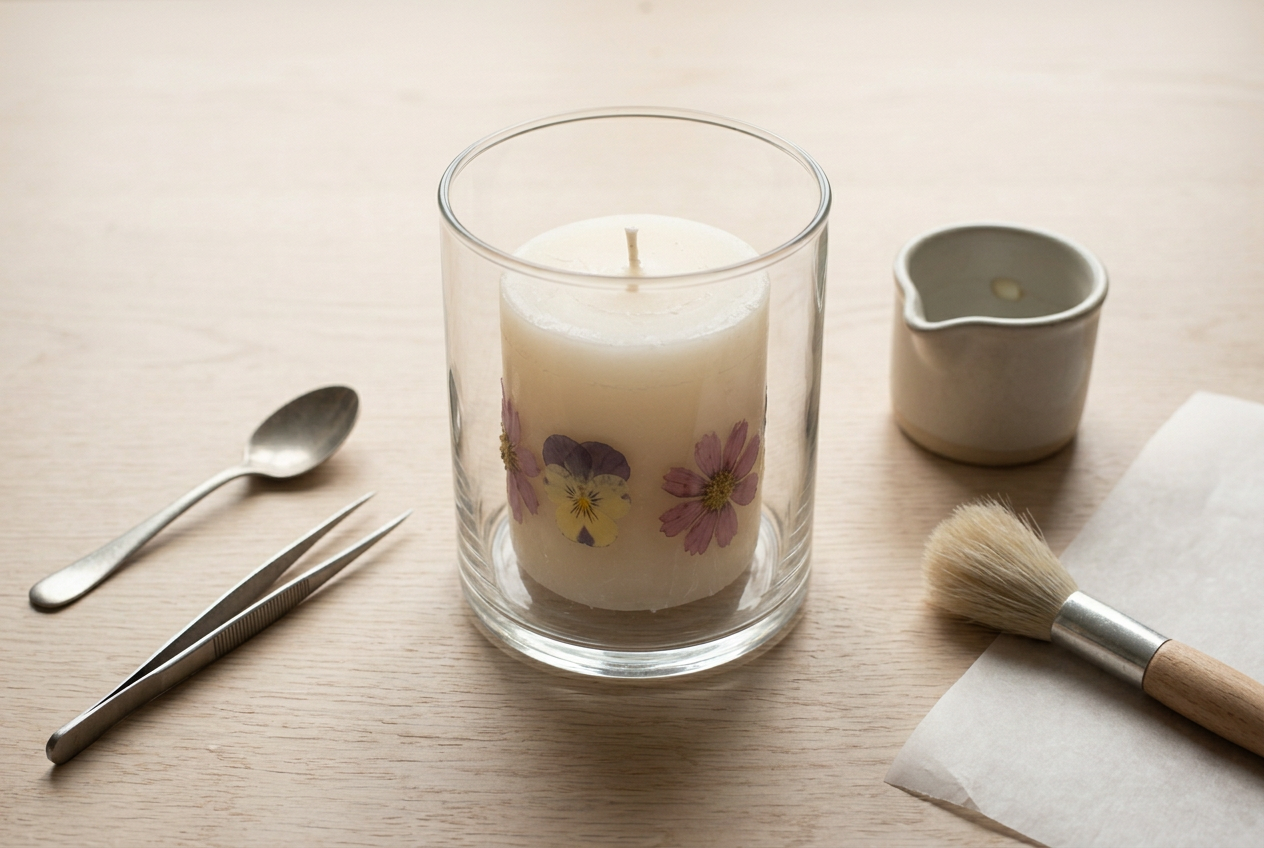
Trim the wick to about 5mm. A long wick makes a tall flame, and a tall flame is the whole risk here.
Then decide honestly what this candle is for. As a decorative piece it is finished. If it is going to be lit, put it inside a glass hurricane and never leave it burning unattended, and stop burning it before the flame reaches the level of the highest flower.
A pressed petal is dry plant material sitting under a millimetre of fuel. It will catch if the flame reaches it. The home decor hub has the pieces that carry no flame at all, and the finishing guides cover sealing dried flowers in general.
If it goes wrong
| Problem | Likely cause | How to fix it |
|---|---|---|
| The flower peeled off after a day | The wax never actually melted, so the flower was pressed onto the surface rather than sealed under it | Reheat the spoon for each flower and hold it for a slow five, watching for the wax to go briefly wet-looking under the parchment. |
| The petals went brown where the spoon touched | The spoon was too hot, or it touched the flower directly without parchment between | Use water from a kettle that has stopped boiling, and never press a bare spoon onto a petal. Parchment is what spreads the heat. |
| There is a cloudy patch around each flower | The wax was overheated and re-set unevenly, or the candle was moved while the melted area was still soft | Buff the area gently with a soft dry cloth once cold. Shorter presses with a cooler spoon avoid it next time. |
| The candle surface dented under the spoon | The wax is soft, usually because the candle is heavily scented or was warm to start with | Chill the candle for twenty minutes before decorating, and use a lighter touch. Unscented pillar wax holds its shape far better. |
Are pressed flower candles safe to burn?
Only with real care, and never unattended.
The flowers are dried plant material held on with a thin layer of wax, and wax is fuel. A flame that reaches them will light them. That is not a reason never to burn one, but it is a reason to build the candle so the flame and the flowers never meet: everything in the lower two thirds, a trimmed wick, a glass hurricane around it, and stop burning well before the wax level drops to the highest flower.
Most people end up treating them as decorative candles, lit occasionally and watched. That is the sensible default.
If you want a flower candle you can burn without thinking about it, embed the flowers in the wax of a container candle instead, where the flame sits in a well below them. It is a different project and a much slower one.
Why did my flowers peel off the candle?
The wax never melted properly, so the flower is stuck to the surface rather than under it.
A spoon warmed in hot water loses heat fast. If it presses the flower into wax without the wax turning glassy and flowing over the petal edges, you have a flower pressed onto a cold surface, and it lifts as soon as it is handled.
Reheat the spoon for every single flower, hold it in place for a slow five, and check that the surface has gone briefly wet-looking under the parchment. Thick or fleshy flowers peel for a different reason: air trapped under the raised centre expands slightly and pushes the edges up. Those need to be flat before they go anywhere near the candle.
Scented and soft waxes also hold flowers poorly, because the surface never sets hard over them.
Frequently asked questions
Can you burn a pressed flower candle?
Yes, with care: flowers in the lower two thirds only, wick trimmed to 5mm, inside a glass hurricane, never unattended, and stop burning before the wax level reaches the highest flower.
What flowers work best on a candle?
Anything pressed genuinely flat, with no fleshy centre. Violas, cosmos, larkspur and single daisies are ideal. Roses and carnations trap air and lift.
Can you use fresh flowers on a candle?
No. Fresh flowers hold water, which turns to steam under a hot spoon and pushes the wax away, and they brown within a day or two on the candle.
Do you need a heat gun for pressed flower candles?
No, a spoon warmed in hot water gives more control. A heat gun melts a wide area at once and slumps the surface before the flower has seated.