
A polymer clay pasta machine turns ten minutes of hand conditioning into one. Flatten the block first, pass it through on the thickest setting, then fold it and feed it fold first every time so the rollers push the air out instead of trapping it in the sheet.
A polymer clay pasta machine turns ten minutes of hand conditioning into one, and it is the single piece of kit that changes how much you actually make.
It comes with one rule that is not negotiable. Once it has rolled polymer clay it never touches food again, and no amount of washing changes that.
The tools hub covers the rest of the kit worth owning.
Materials
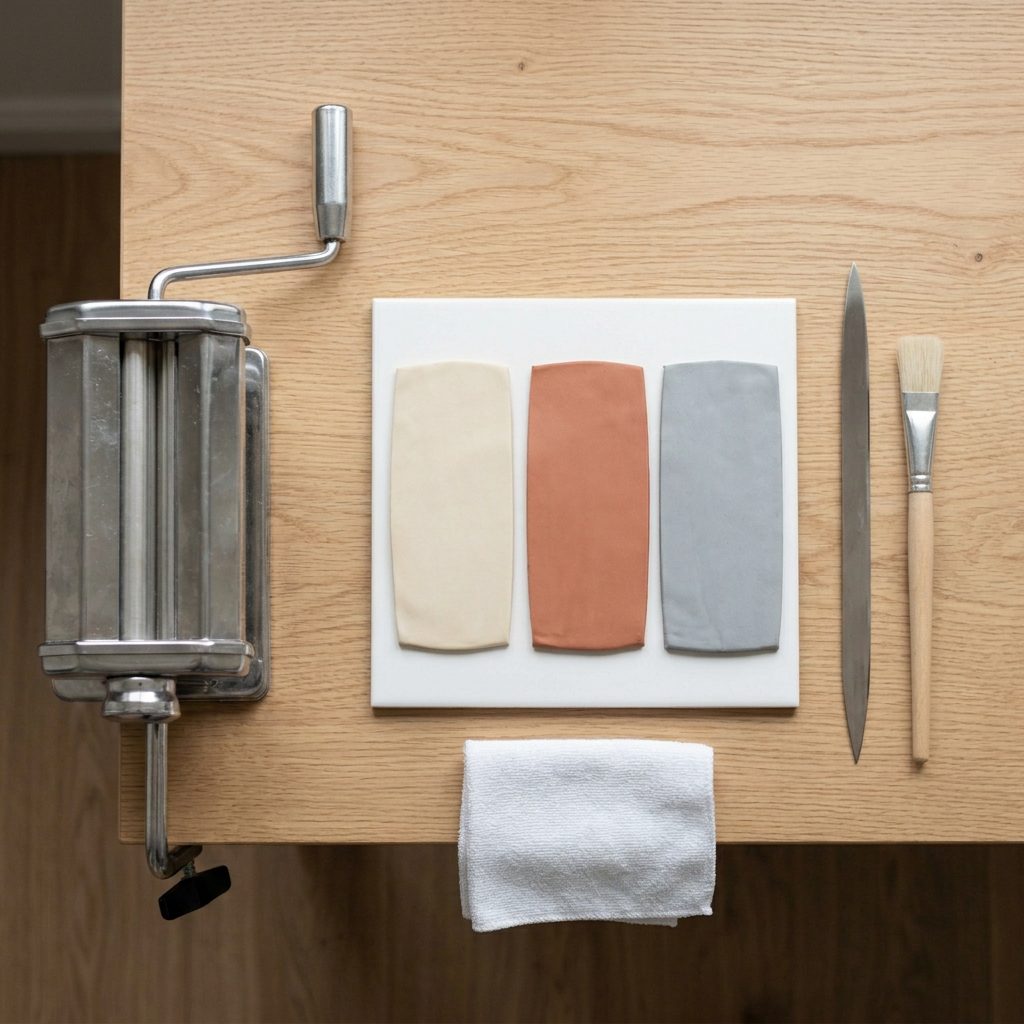
- Polymer clay in two or three muted colours
- A scrap block of light clay for cleaning
- Clay softener, for old hard clay
Tools
- A cheap steel pasta machine, clay only
- Long tissue blade
- Soft flat brush
- Lint-free cloth
- White ceramic tile
Two minutes a block once you have the rhythm.
How do you use a polymer clay pasta machine?
Flatten the block by hand, pass it through on the thickest setting, fold it in half and feed it back fold first, repeat until the clay is soft and even, then step down the settings one at a time.
1Set out what you need

Any cheap steel machine does this job. The expensive ones roll a fractionally more even sheet and are no easier to clean.
Clamp it to the edge of the desk properly. A machine that walks about while you crank pulls the clay off line and creases every pass.
Mark it as yours. This one is now a clay tool, permanently.
2Flatten the block by hand first
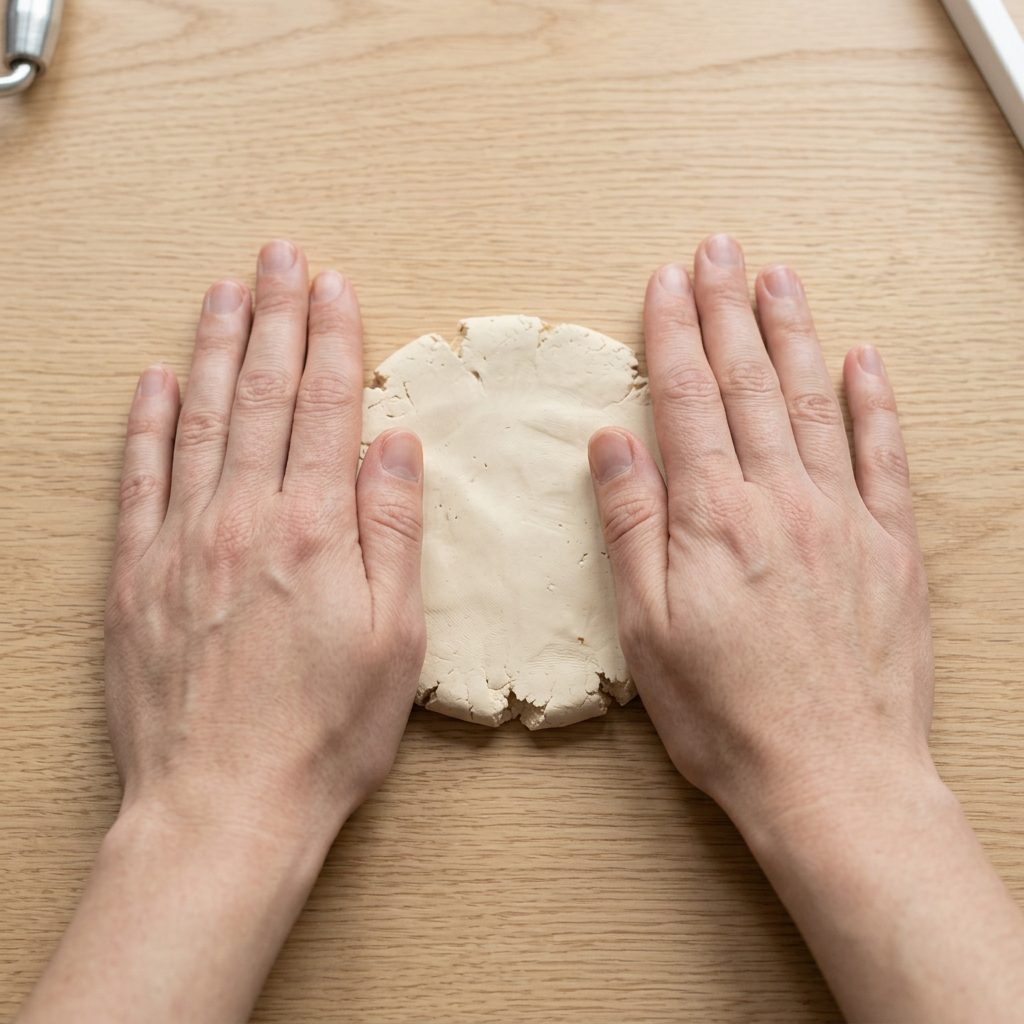
Warm it and flatten it to about five millimetres before it goes near the rollers. Feeding a full block in cracks the sheet and strains the gears.
Cold clay is the enemy here. Ten minutes in a pocket, or five under a warm hand, and the first pass comes out whole instead of shattered.
Very hard clay wants a few drops of softener kneaded in first, and a night to absorb it.
3Pass it through on the thickest setting

Thickest setting for everything at this stage. Trying to condition on a thin setting shreds the clay into lace.
Support the clay as it comes out. Left to itself it folds back against the rollers and takes a crease that survives another six passes.
Expect the first sheet to look terrible: cracked edges, ragged holes. That is what conditioning fixes.
4Fold and feed it fold first
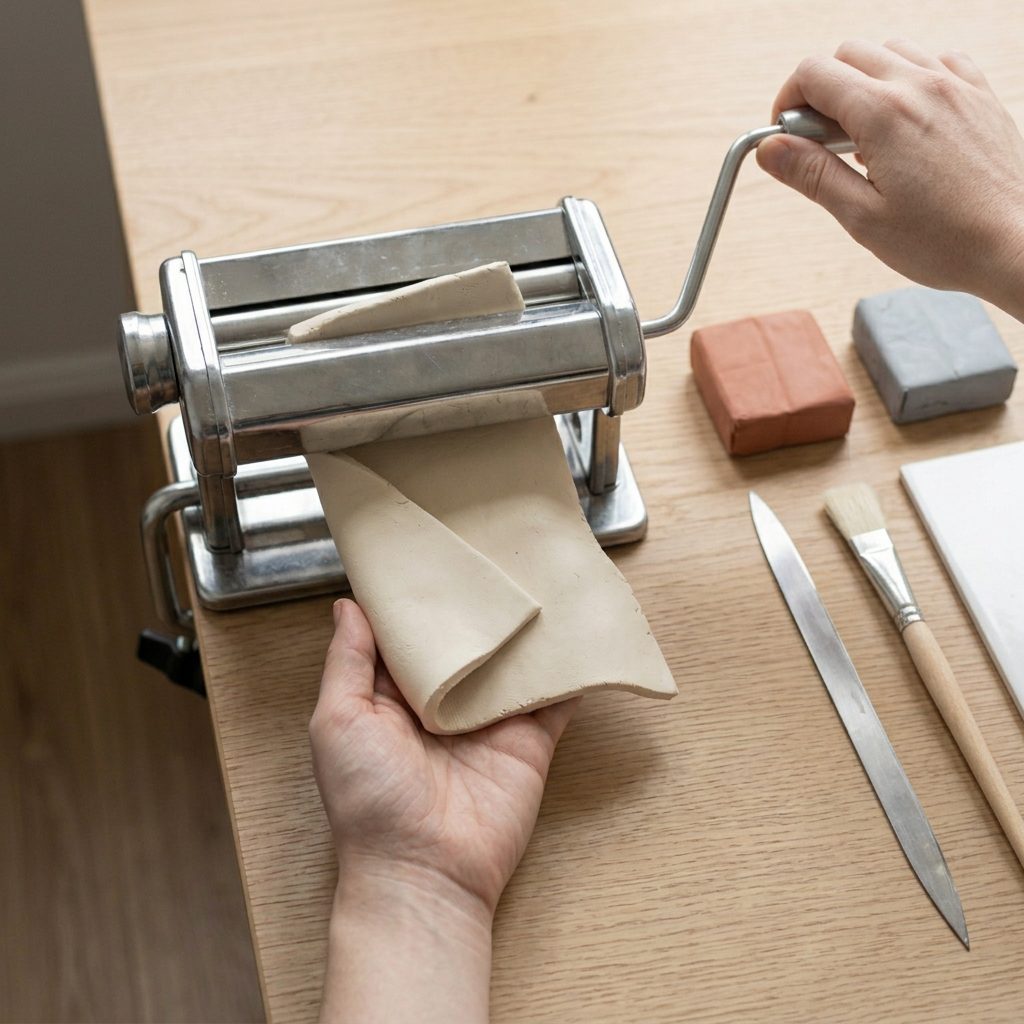
Fold in half, turn it, and feed the folded edge in first. Every time, without exception.
This is the whole technique. A fold fed open edge first traps a pocket of air, which becomes a blister that only shows up after baking. Fold first pushes the air out ahead of the rollers.
Fifteen to twenty passes for a stiff block. The clay is conditioned when a folded sheet bends without cracking at the fold.
5Step down the settings one at a time

Never jump from the thickest setting to the thinnest. The rollers drag the sheet rather than rolling it, and it comes out stretched, ridged and thinner at one end.
One notch at a time, one pass each. It takes fifteen seconds and gives a sheet of genuinely even thickness.
Lay each sheet on a tile rather than the desk. Thin clay picks up every speck of dust from a wooden surface.
6Clean the rollers before the next colour
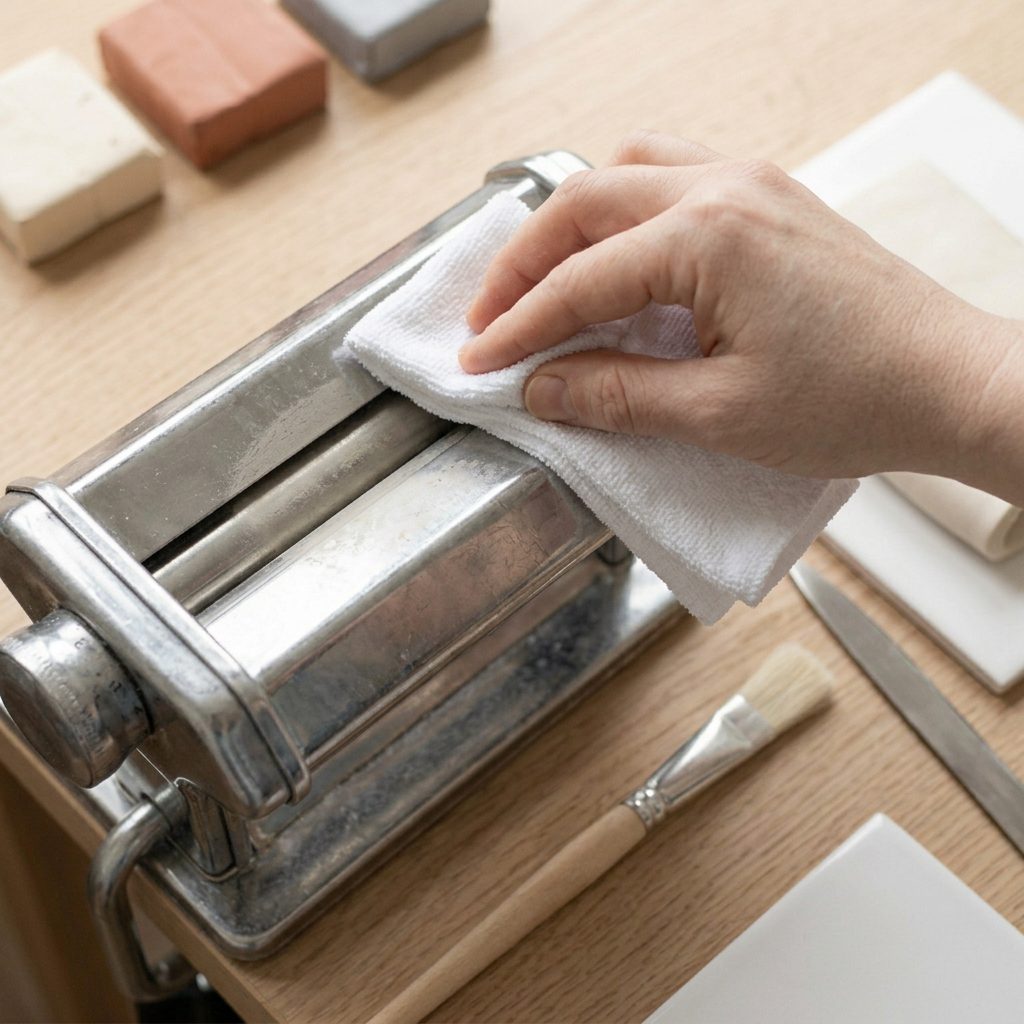
Run a scrap of light clay through twice; it picks up most of the colour left behind. Then wipe the rollers with a cloth.
Brush the gaps at the ends where colour collects. A grey streak down a cream sheet always comes from there.
Never wash it. Water in the gears rusts them, and the rust marks every sheet afterwards. The polymer clay hub covers conditioning by hand, and the techniques hub covers what to do with the sheets.
If it goes wrong
| Problem | Likely cause | How to fix it |
|---|---|---|
| The clay shreds into lace on the first pass | It is cold, or it is old clay that has lost plasticiser | Warm it in your hands and flatten it before rolling. If twenty passes do not fix it, knead in a few drops of softener and leave it overnight. |
| Bubbles appear under the surface after baking | The folded sheet was fed open edge first, so air was rolled into the middle of the clay | Always feed the folded edge in first. Existing bubbles can be pricked with a needle and smoothed before baking, not after. |
| A ridge runs down every sheet | Something is stuck to the rollers, usually a crumb of hard clay or a grain of glitter | Run a scrap sheet through, wipe the rollers and brush the gaps at the ends. A chip in the steel itself cannot be fixed. |
| The sheet is thinner at one end | The settings were jumped rather than stepped down, so the rollers dragged and stretched the clay | Fold it, recondition it on the thickest setting, then step down one notch at a time. |
Can you use a pasta machine for food after clay?
No. Treat it as a one-way decision.
Polymer clay is a PVC-based plastic with plasticisers in it, and it leaves a residue in the seams, the gears and the scratches on the rollers that no cleaning reaches. The parts that hold it are exactly the parts you cannot get at.
That is not a reason for alarm about the clay itself, which is safe to handle and to bake at home. It is a reason not to make pasta on rollers coated in it.
Buy the cheapest machine you can find for clay and leave the kitchen one in the kitchen. A basic steel one costs less than two blocks of good clay.
If you have already used yours for both, retire it to the clay desk. It has done no harm to anyone, but it should not go back to food.
Why does clay come out cracked or ridged?
Cracked edges mean the clay is too cold or too old, not that the machine is wrong.
Warm it in your hands, flatten it by hand first, and give it more passes on the thickest setting. Clay that still shreds after twenty passes has lost plasticiser to age and needs a few drops of softener kneaded in.
Ridges down the sheet mean something on the rollers: a crumb of hard clay, a grain of glitter, a chip in the steel. Run a scrap sheet through and check it, then brush the roller ends.
A sheet thinner at one end means the setting was jumped. Step down one notch at a time.
And a sheet with bubbles under the surface was folded the wrong way round. Fold first, always.
Frequently asked questions
Can you use a pasta machine for food after using it for clay?
No. Residue stays in the seams, gears and roller scratches where cleaning cannot reach. Buy a cheap machine for clay and keep the kitchen one separate.
What setting should you condition clay on?
The thickest one. Thin settings shred cold clay, and conditioning is about folding and passing repeatedly rather than about making a thin sheet.
How many passes does conditioning take?
Fifteen to twenty for a stiff block. It is done when a folded sheet bends without cracking along the fold.
How do you clean a pasta machine used for clay?
Run a scrap of light clay through twice to lift the colour, wipe the rollers with a lint-free cloth and brush the ends. Never wash it, because water rusts the gears.