

Air dry clay ideas divide into pieces that hold an even wall thickness and pieces that do not. Ring dishes, coasters, bud vases, beads and pressed wall tiles all sit safely between 5mm and 12mm, which is the range where clay dries without cracking. Each of the twenty-five below states the size to make it.
Most air dry clay ideas fail on the same two details, and neither of them is the shaping. They fail on wall thickness and on the finish.
A piece rolled to an even 6mm and sanded properly at 400 grit reads as bought. The same piece rolled thin in one corner and left with a furred edge reads as a school project, whatever shape it is. So the twenty-five below are chosen for shapes that hold thickness easily, and each one says what size to make it.
Nothing here needs a kiln. The air dry clay hub covers the material itself, and finishing covers the sealing that keeps any of it usable.
Air dry clay ideas that hold up in daylight
Photographs flatter clay. Daylight does not. Before the list, the two things that separate the pieces worth keeping from the ones that end up in a drawer:
Thickness. Under about 5mm, air dry clay is brittle and will snap at the narrow point. Over about 12mm it cracks as it dries, because the outside shrinks while the middle is still wet. Between those two numbers almost nothing goes wrong.
Edges. A cut edge dries with a slight burr. Sanding it back once the piece is bone dry is the single cheapest upgrade available, and it takes about ninety seconds per piece.
1A ring dish for the bathroom shelf
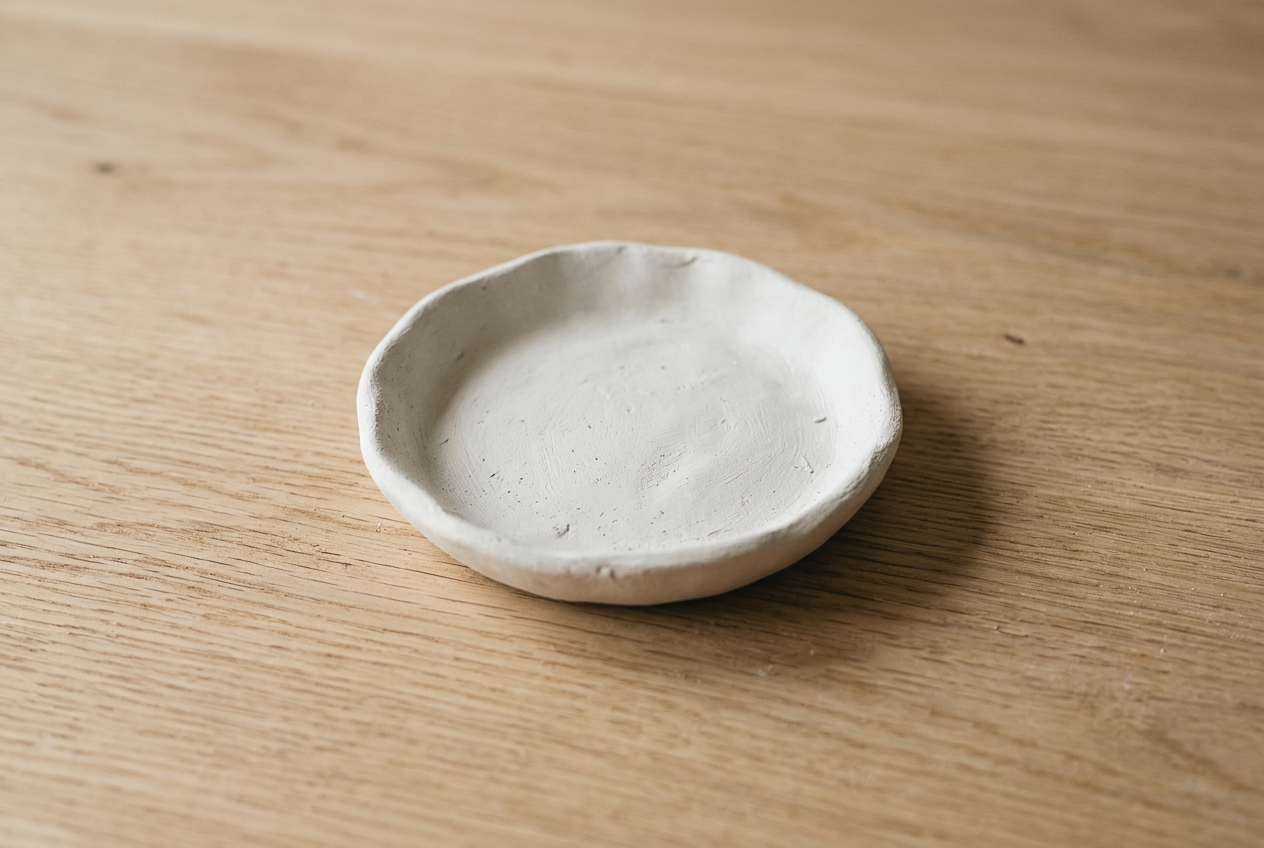
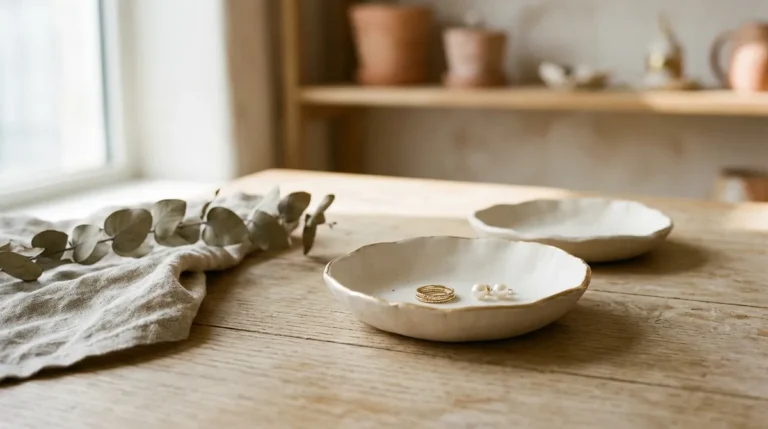
The obvious one, and still the best first project. A circle of clay draped over an upturned bowl takes four minutes and dries in two days.
Keep it shallow. A deep dish needs a thicker wall to stay rigid, and thick walls are where cracks start. Two centimetres of depth is plenty for rings and studs.
The rim is the whole piece. Pinch it up slightly uneven on purpose rather than trying for a perfect circle, because a perfect circle in air dry clay looks like a failed attempt at pottery.
2A pinch-pot bowl for keys by the door
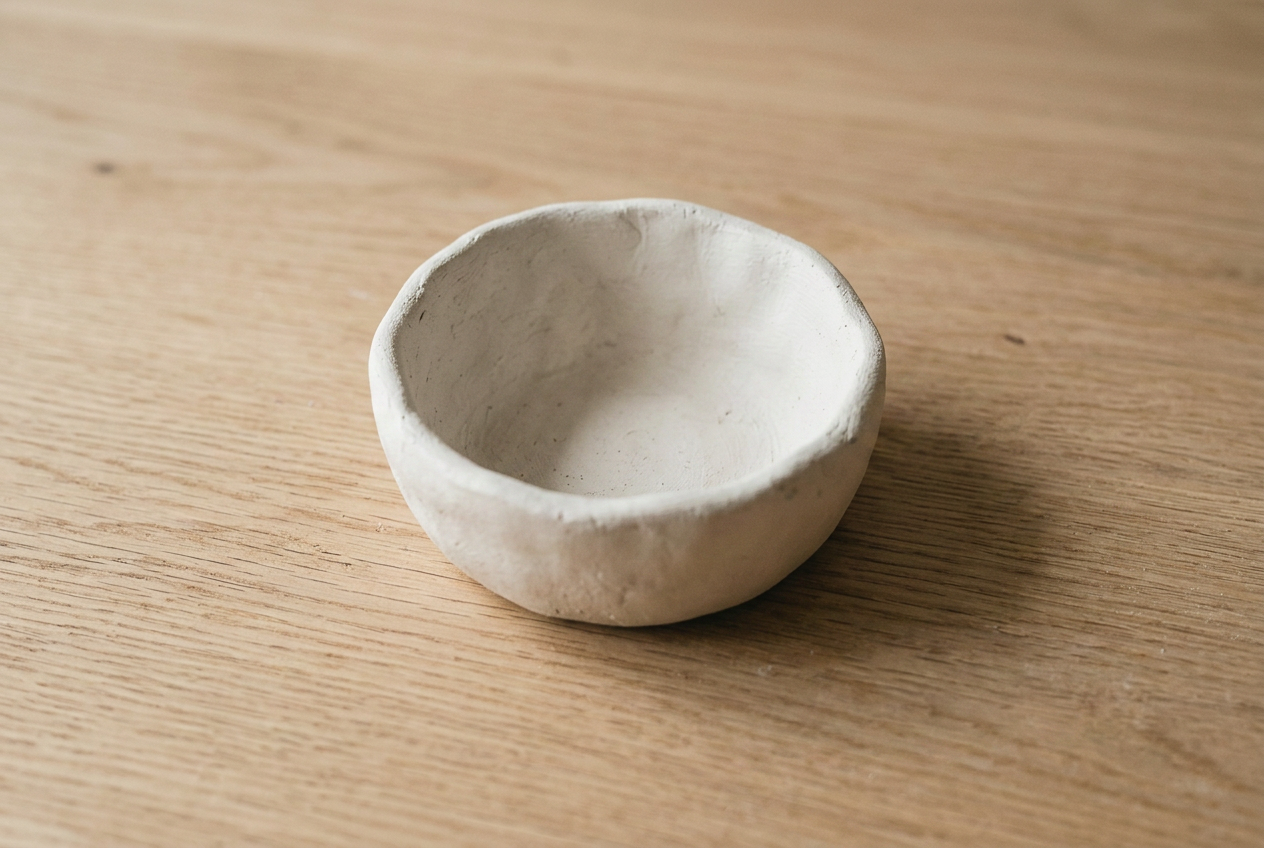
A pinch pot is the oldest way to make a bowl and it suits this material better than coiling does. One ball of clay, thumbs pressed into the centre, walls drawn up by turning.
Aim for a wall about 8mm thick and check it by squeezing gently between two fingers as you turn. Thin spots are invisible until they crack.
Keys are heavy and they get dropped in from a height. This is one of the few pieces on the list worth making deliberately chunky.
3Square coasters that sit flat
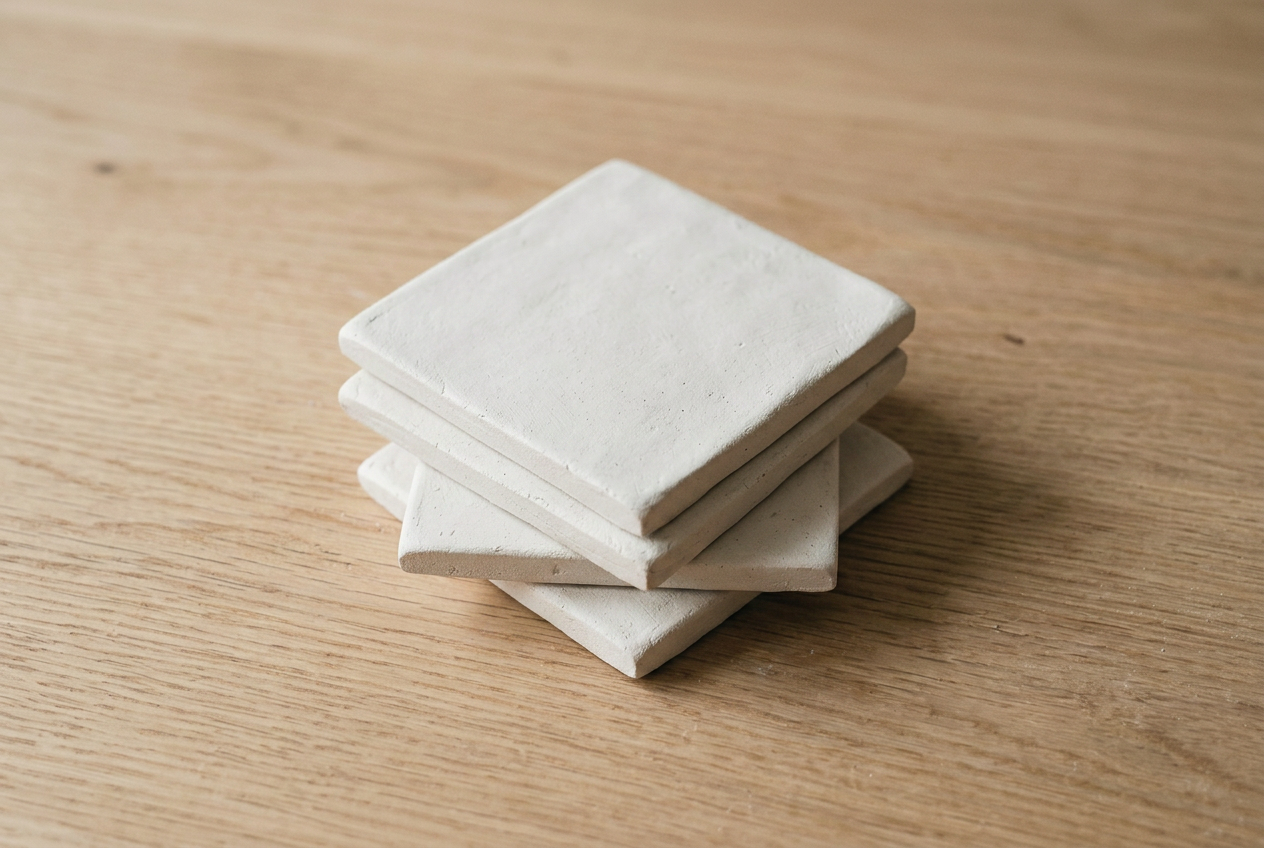
Coasters are the project most likely to warp, because a flat slab dries fastest at its edges and curls upwards. Dry them raised on a rack so air reaches both faces, and they stay flat.
Cut them at 10cm square and 6mm thick. Smaller than that and a mug overhangs; thicker and the drying time doubles.
They need a real seal if a wet glass is ever going on them. Two coats, and check the underside as well as the top.
4A taper candle holder
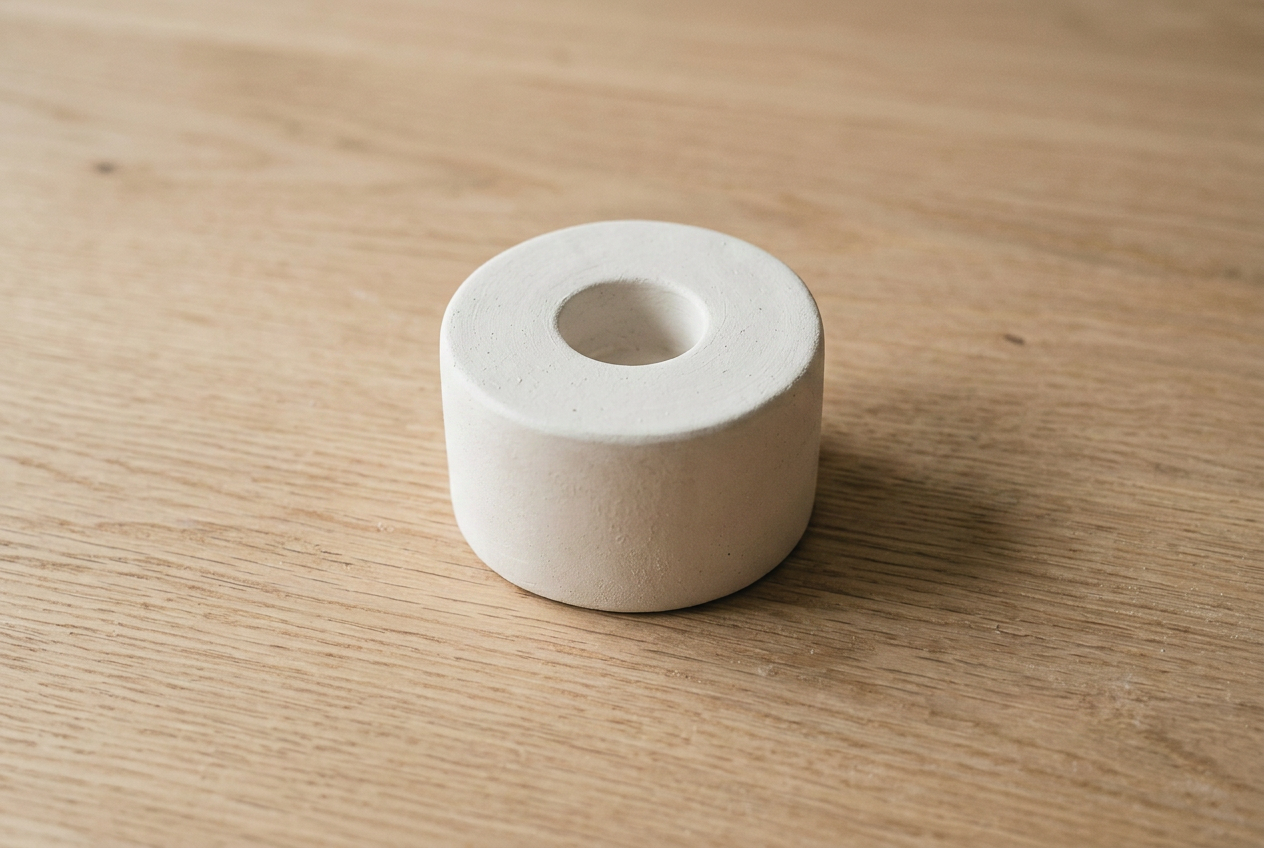
A cylinder with a hole in the top, which sounds too simple to bother photographing until you see one in a group of three at different heights.
Cut the socket with the actual candle while the clay is soft, then remove it and let the hole shrink slightly as it dries. It ends up gripping the candle rather than rattling.
Air dry clay is not fireproof and will not survive a flame reaching it. Keep the socket deep enough that the candle is replaced long before it burns down.
5A bud vase for a single stem
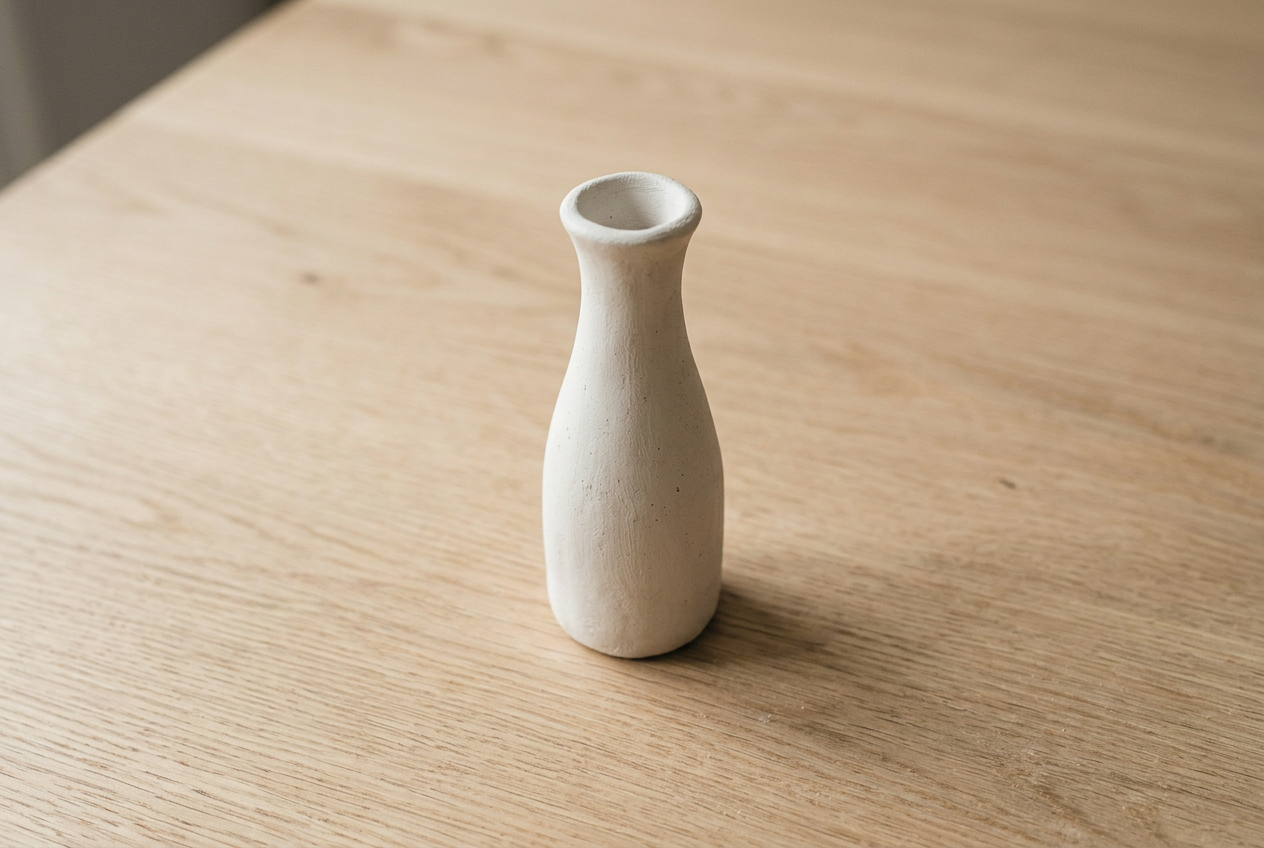
Water and air dry clay do not mix, so this holds a dried stem or it holds a test tube that holds the water. Both look fine.
Build it as a coil pot and smooth the coils away, or wrap a slab around a bottle and join the seam. The wrap is faster and gives a straighter wall.
Flare the lip outwards by two or three millimetres. It reads as deliberate; a plain straight tube reads as a piece of pipe.
6A cover for a plastic plant pot
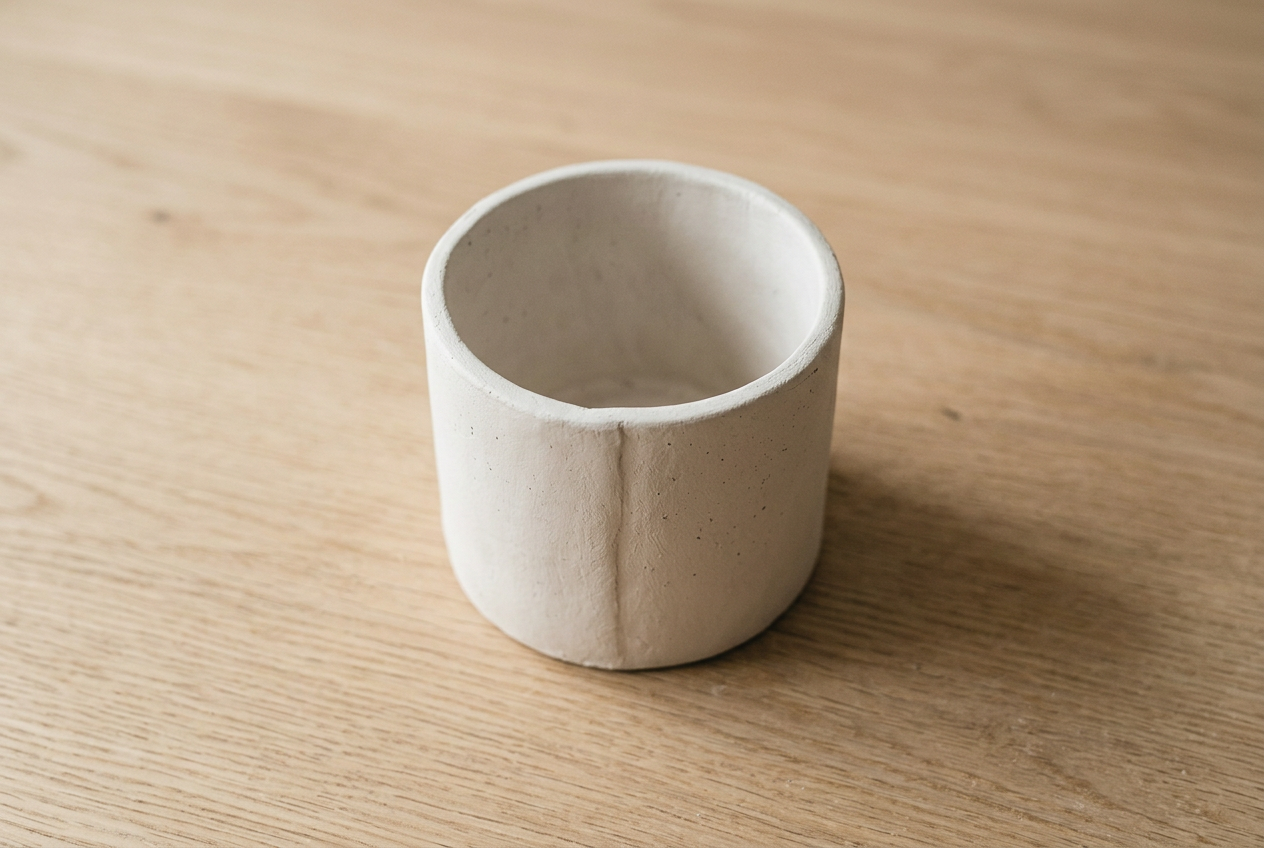
Nobody should be planting directly into air dry clay, because it softens and eventually collapses. A cover sidesteps the whole problem: the plastic nursery pot stays inside and does the work.
Measure the pot and add four millimetres all round so it drops in rather than wedging.
Leave the base open. It saves clay, it dries faster, and it means water that escapes has somewhere to go.
7Statement arc earrings
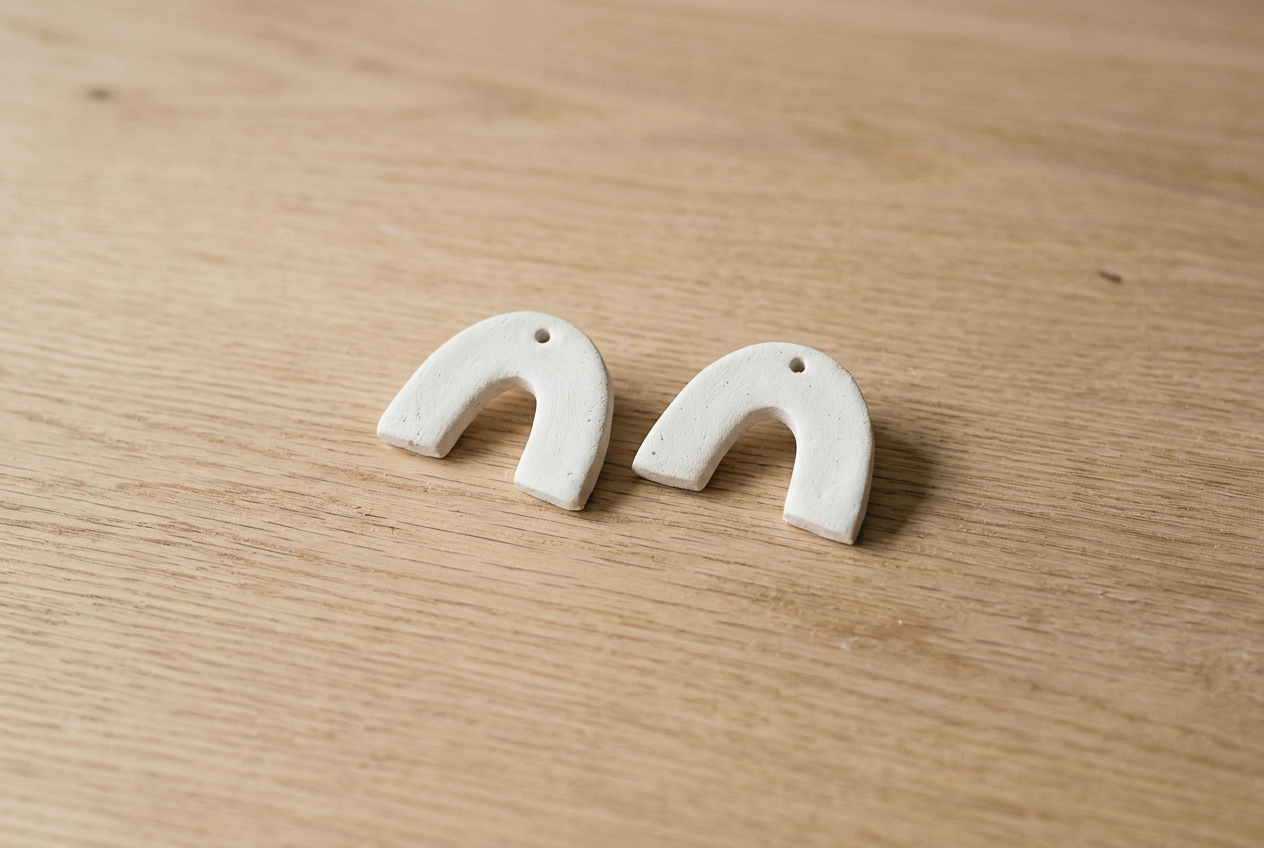
Air dry clay earrings work if they are thin and they do not work if they are thick, because weight is what pulls an earlobe about. Three millimetres is the target.
Pierce the hole while the clay is soft and make it larger than you think you need. It shrinks, and drilling a dry piece splits it about a third of the time.
Cut both from the same rolled sheet in one session. Clay rolled on two different days will not match in thickness or in colour.
8Rolled beads for a necklace
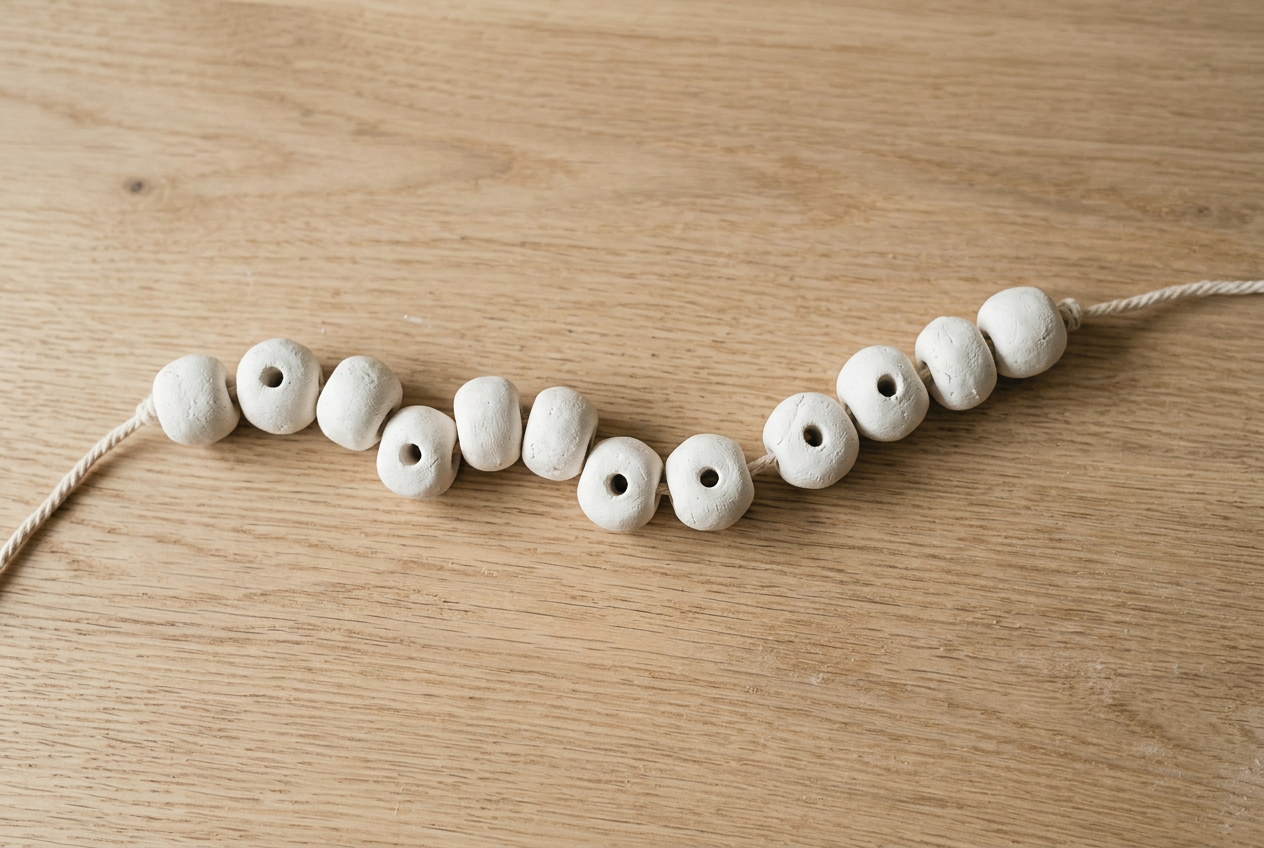
Beads are the cheapest way to use up an offcut, and the irregularity that spoils a coaster is exactly what a strung necklace wants.
Roll them, pierce them on a skewer, then leave them threaded loosely on that skewer to dry. A bead dried flat on a board comes out with one side squashed.
Roll them again lightly after piercing to close the ridge the skewer pushes out.
9Star ornaments for the tree
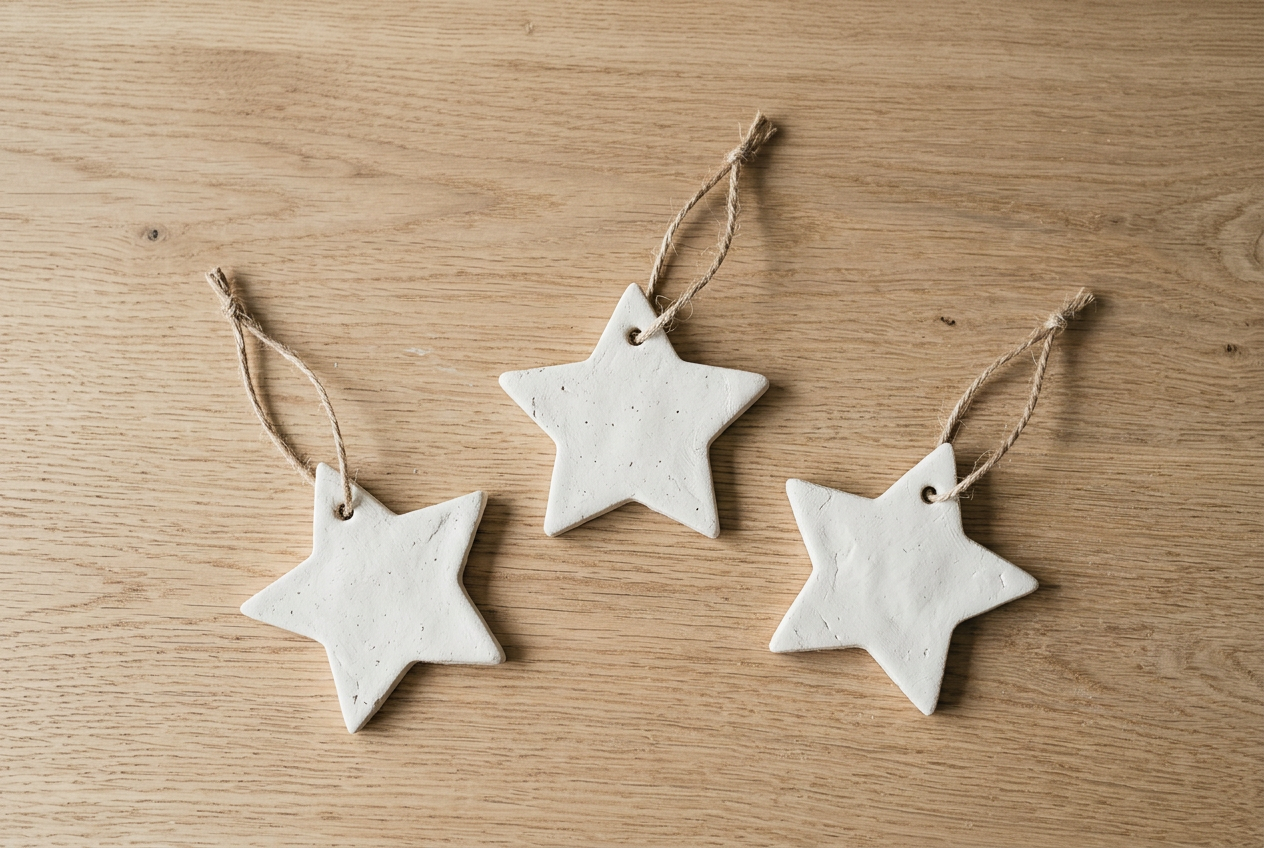
Cut with a cutter, pierced with a straw, dried flat under a light board so they stay flat. That last part is what most people skip.
Five millimetres thick. Thinner ones snap in the box between one December and the next, and they always snap at a point.
Punch the hole 8mm in from the edge. Closer than that and the bridge of clay above it fails when the twine takes weight.
10An incense holder with a proper channel
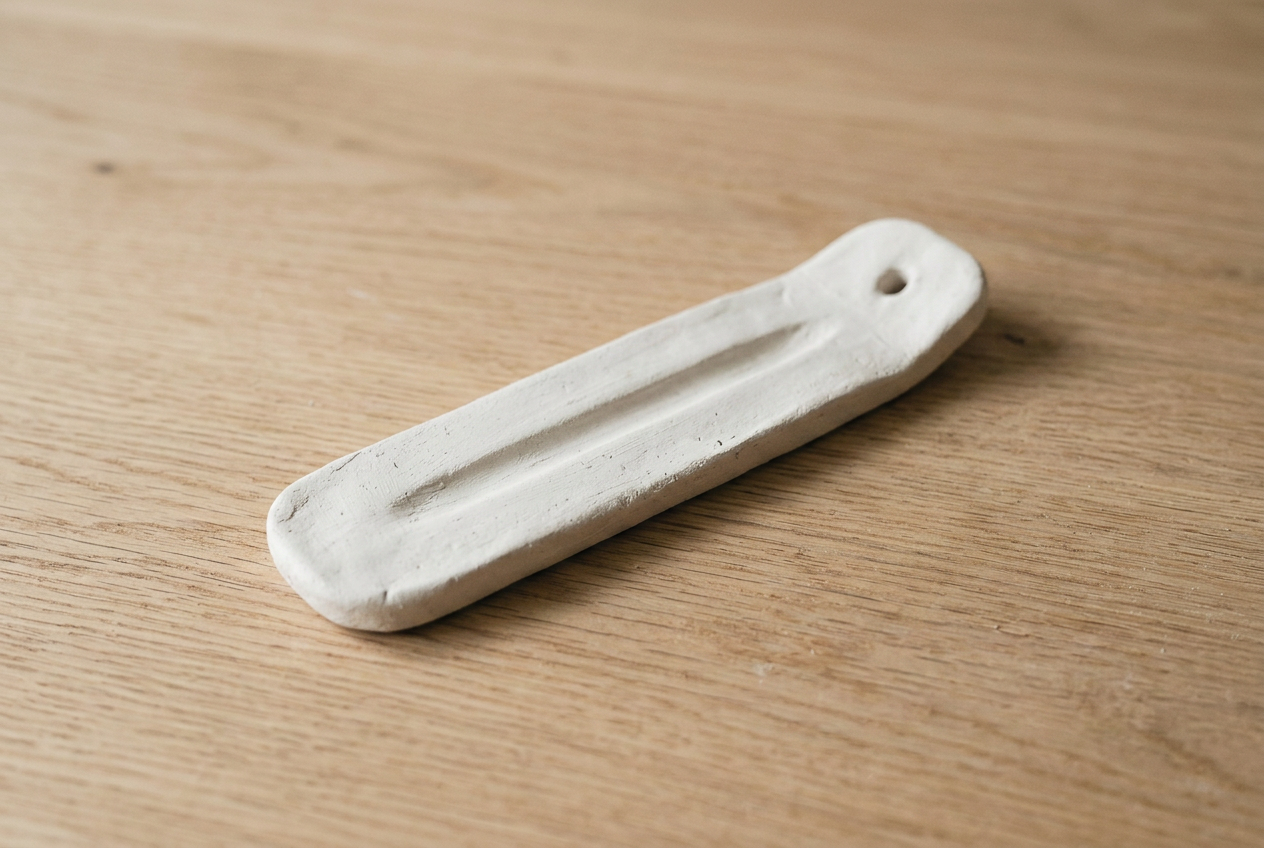
Two features make the difference between this and a lump with a hole in it: the channel that catches ash, and the hole angled at about twenty degrees rather than straight up.
The channel wants to be shallow and wide. Deep ones are hard to wipe out and ash sticks in the corners.
Seal it. Ash and smoke residue mark unsealed clay permanently and the marks are the colour of old tea.
11Napkin rings in a set of four
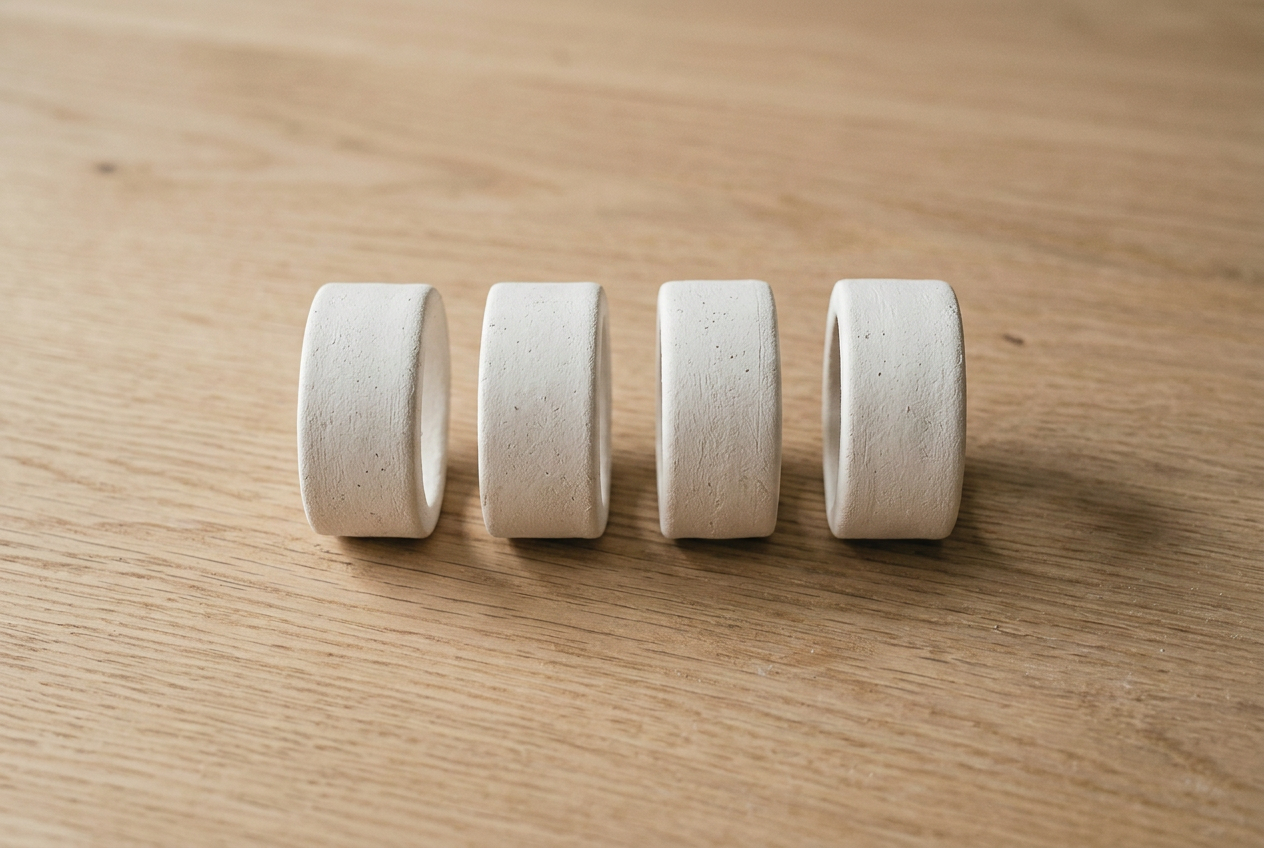
Wrap a strip of clay around a cardboard tube, join it, slide it off once it holds shape. The tube is what makes four of them match.
Six millimetres thick. A napkin ring gets pushed onto a bundle of fabric and a thin one splits at the join.
Make five. One will crack, and a set of four is worth more than a set of three.
12A soap dish that actually drains
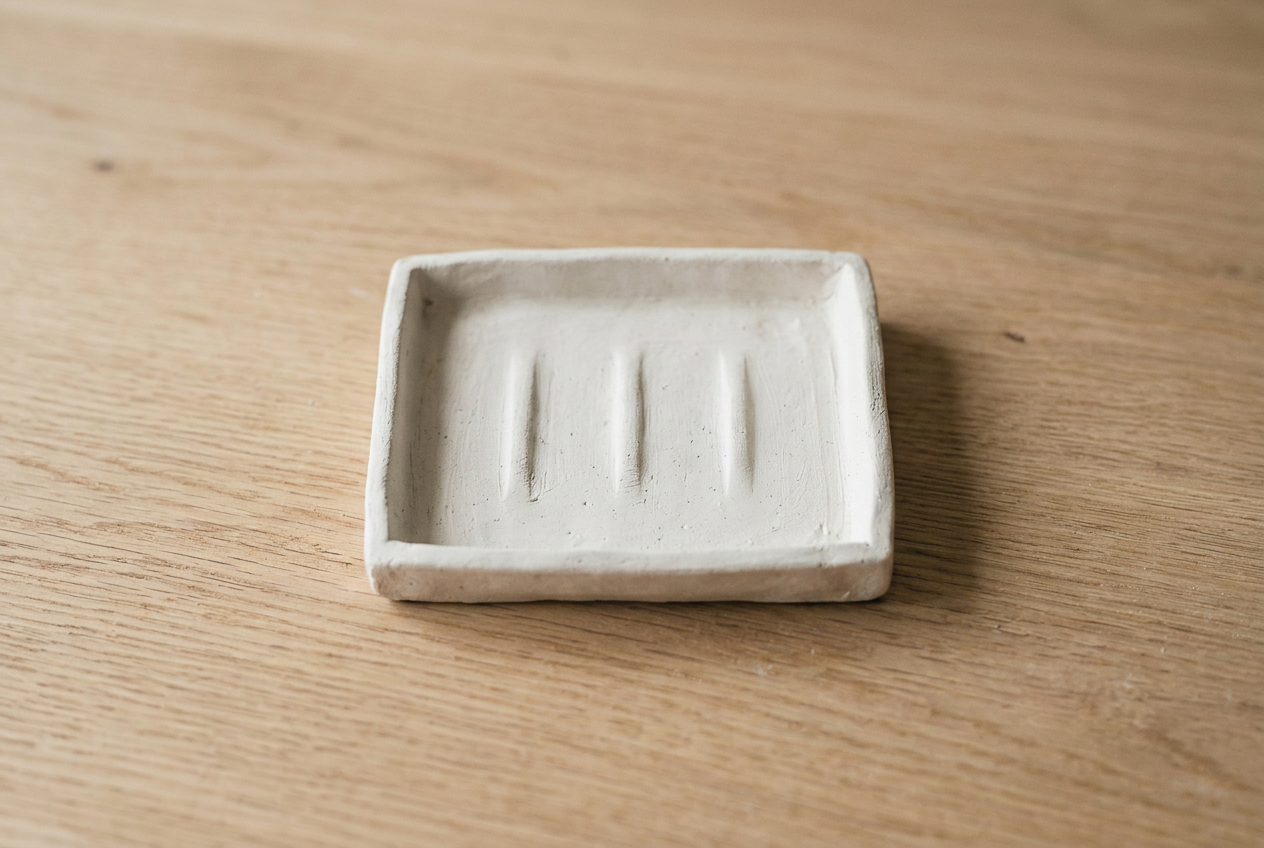
Ridges across the base, not along it, so water runs off the short way and the bar dries.
This is the piece on the list most likely to be ruined by poor sealing, because it lives in permanent damp. Three coats, and re-do them once a year.
Keep the lip low, about 8mm. A tall lip holds a puddle, which is the exact problem the ridges exist to solve.
13Fridge magnets from offcuts
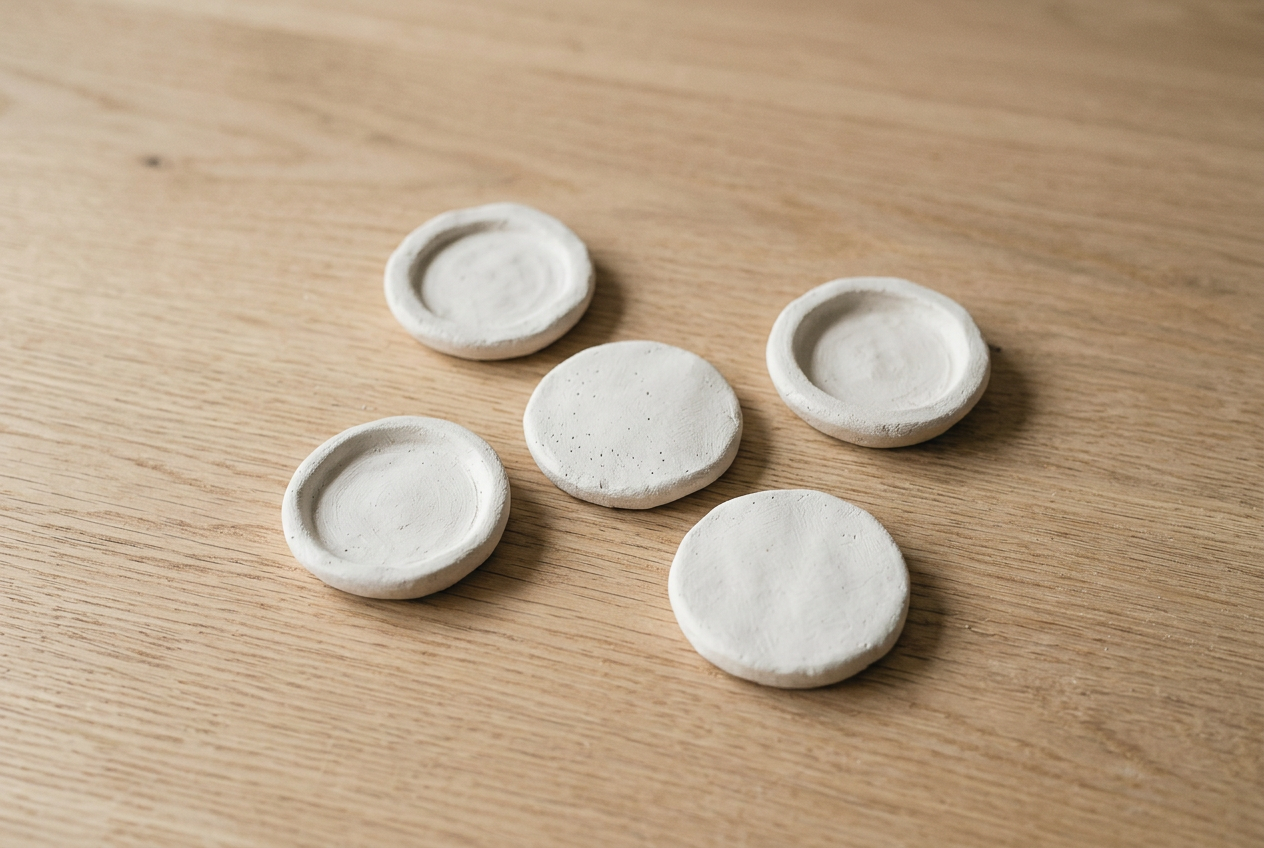
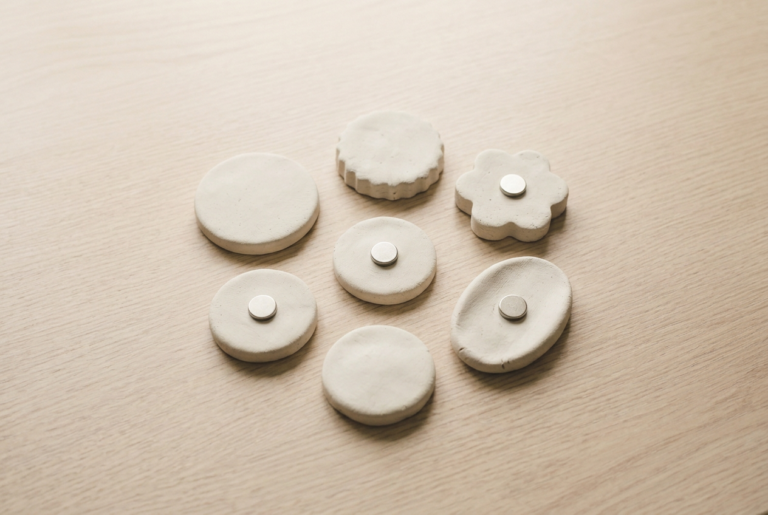
Press a shallow recess into the back while the clay is soft, so the magnet sits flush instead of standing the disc off the fridge at an angle.
Small discs dry in under a day, which makes this the project to do with whatever is left on the board at the end of an afternoon.
Glue the magnets in after sealing, not before. Sealer creeps under a magnet and pushes it off a week later.
14A trinket box with a fitted lid
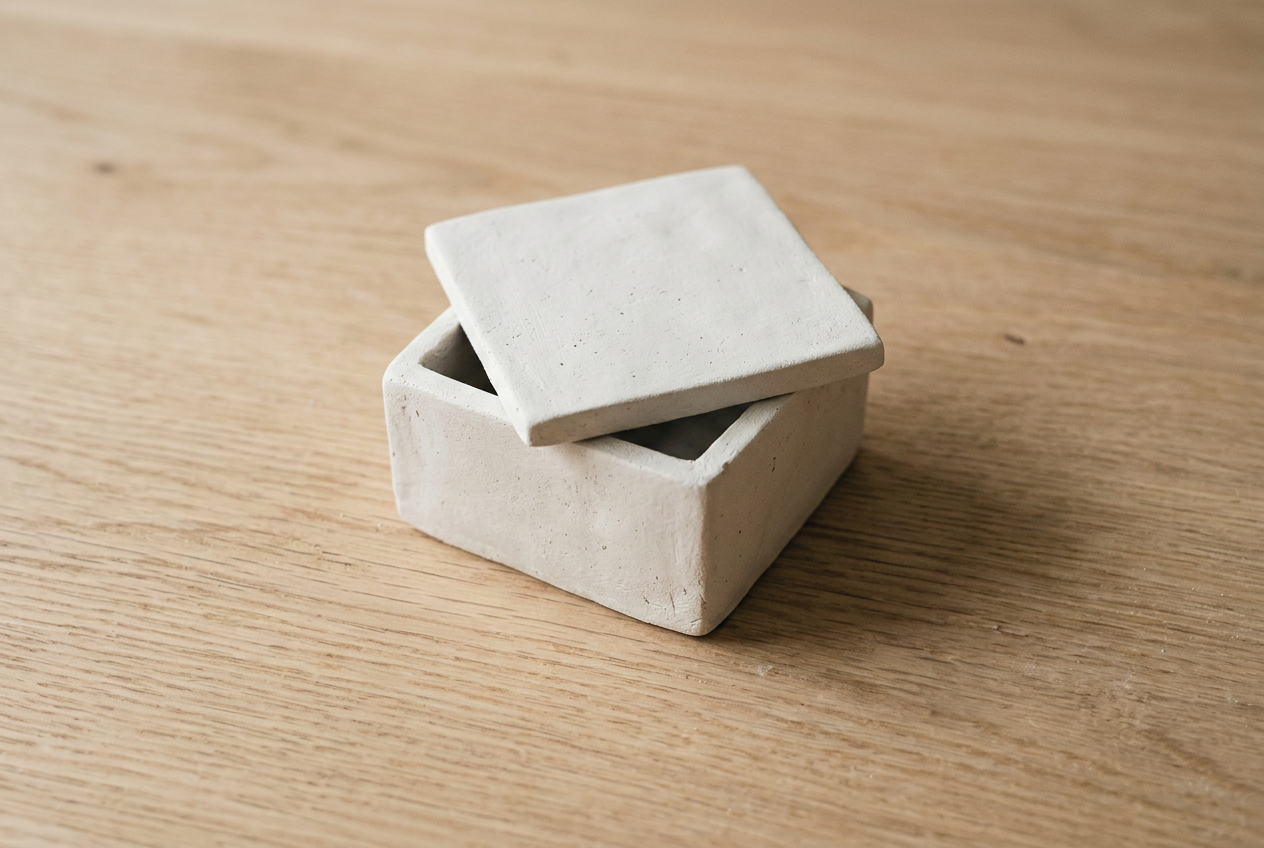
Build the walls as four slabs, join them, then cut the lid from the same sheet so the grain and thickness match.
Cut the lid two millimetres oversize in both directions. Clay shrinks by roughly five per cent as it dries and a lid cut to exact size ends up rattling.
Dry the lid sitting on the box, not beside it. They shrink together that way and the fit stays.
15Keyring charms
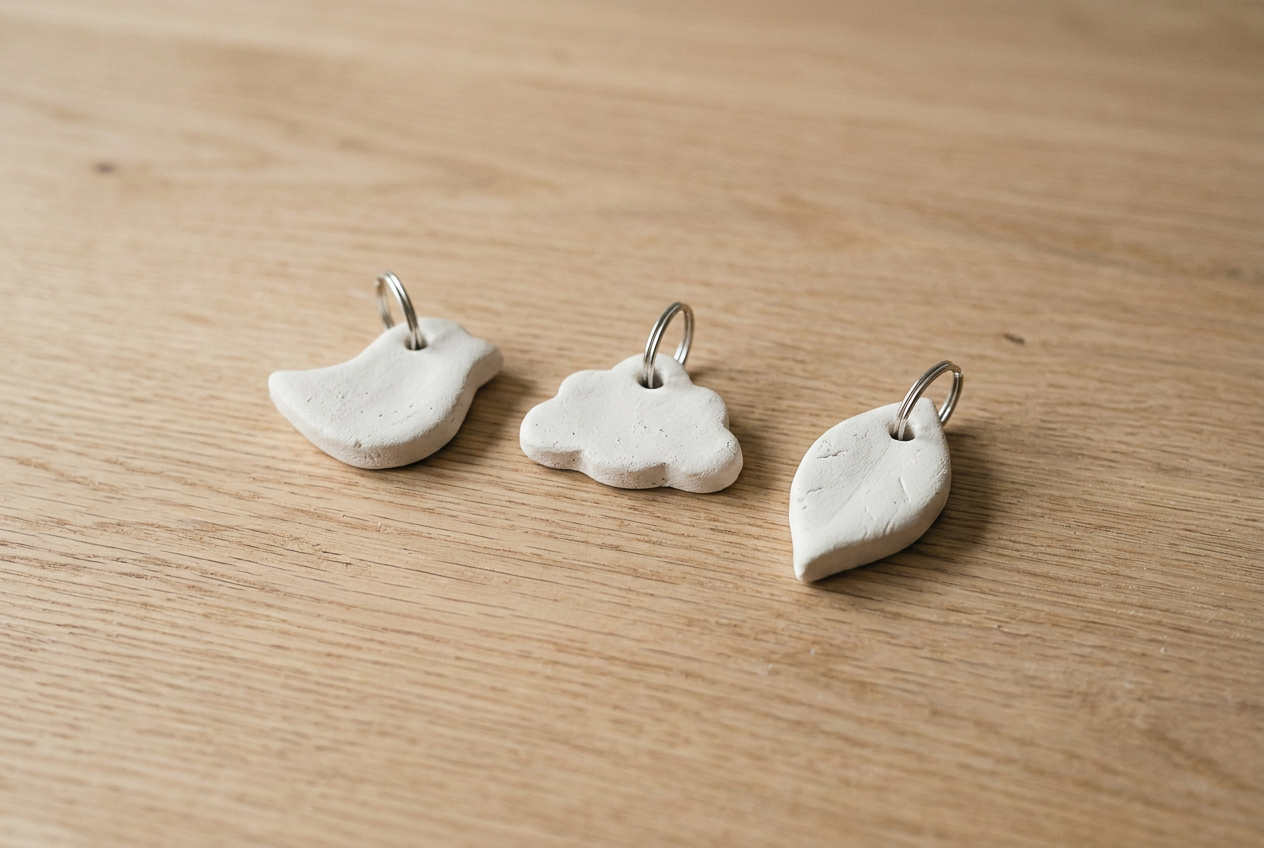
A keyring lives in a pocket with metal, so this is the piece where thickness earns its place. Five millimetres minimum.
Thicken the clay around the hole rather than piercing straight through a thin edge. That ring of extra material is the whole difference between a charm that lasts a year and one that lasts a fortnight.
Seal it properly, because pocket lint sticks to bare clay and never comes off.
16A relief wall tile
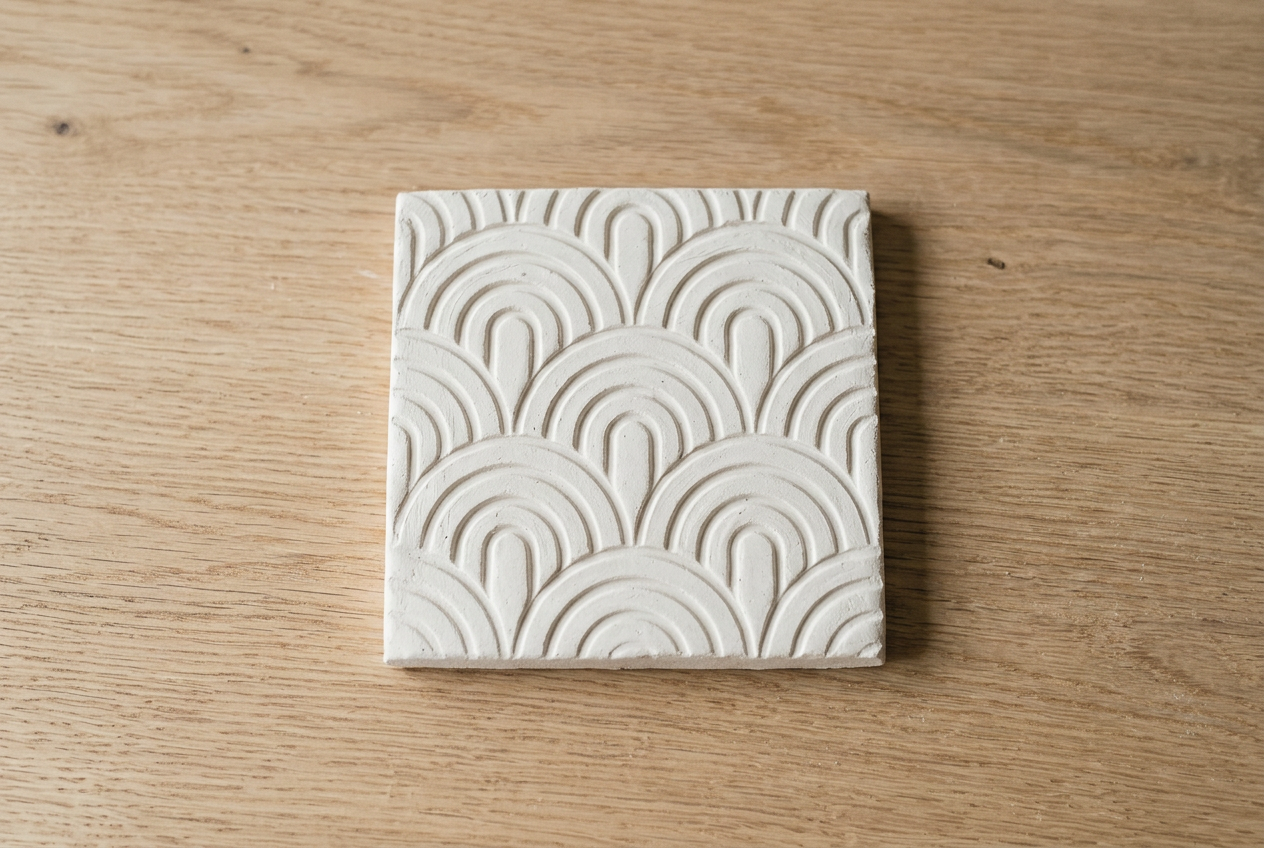
Pressed relief is where air dry clay beats every other cheap material, because it takes a crisp impression and holds it.
Press the pattern when the clay is firm rather than fresh. Fresh clay slumps and the edges of the impression soften within the hour.
Light it from the side once it is up. A relief tile lit flat-on is invisible, which is the commonest reason people think theirs did not work.
17A spoon rest for beside the hob
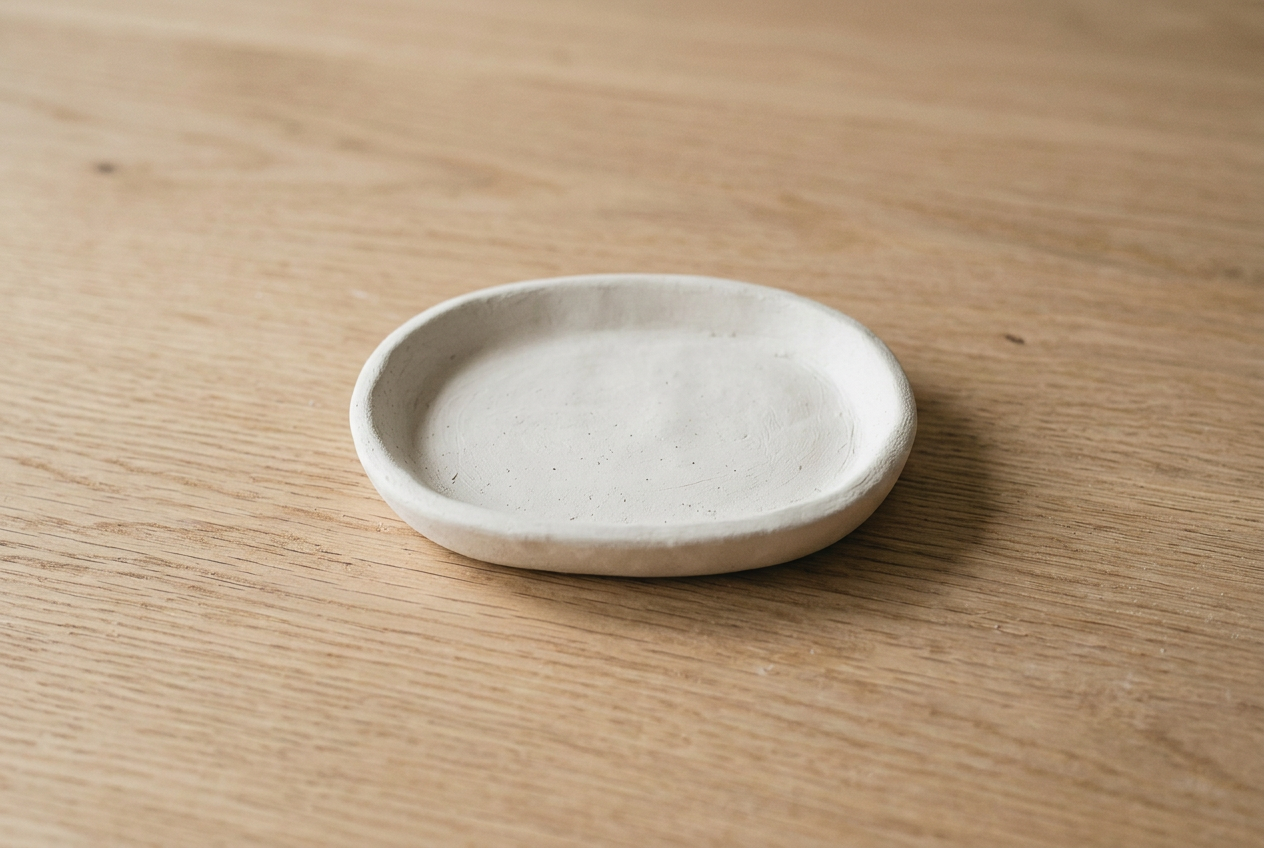
Sauce runs, so the rim goes all the way round rather than stopping at the sides.
This one needs the most serious seal on the list. It meets heat, oil and repeated wiping, and unsealed clay stains from tomato in about four seconds.
Keep it flat-bottomed and heavy. A light spoon rest slides across a worktop when a spoon lands on it.
18A ring cone for a dressing table
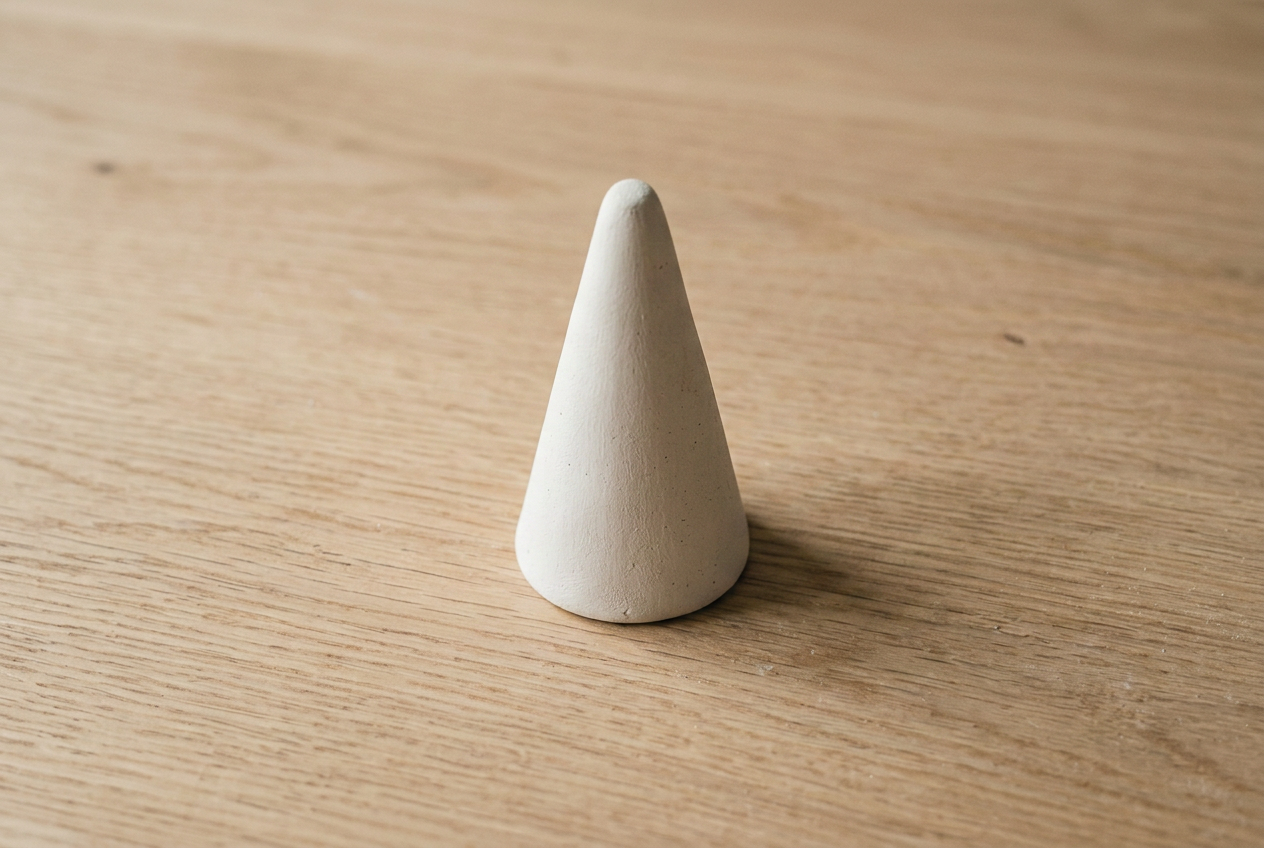
A cone on a disc. The only difficulty is getting the taper even, and the fix is to roll it on the table under a flat board rather than shaping it in the air.
Round the tip. A sharp point chips within a week and it scratches the inside of a ring.
Make the base wider than it looks like it needs to be, or it topples every time a ring comes off.
19A hanging garland of discs
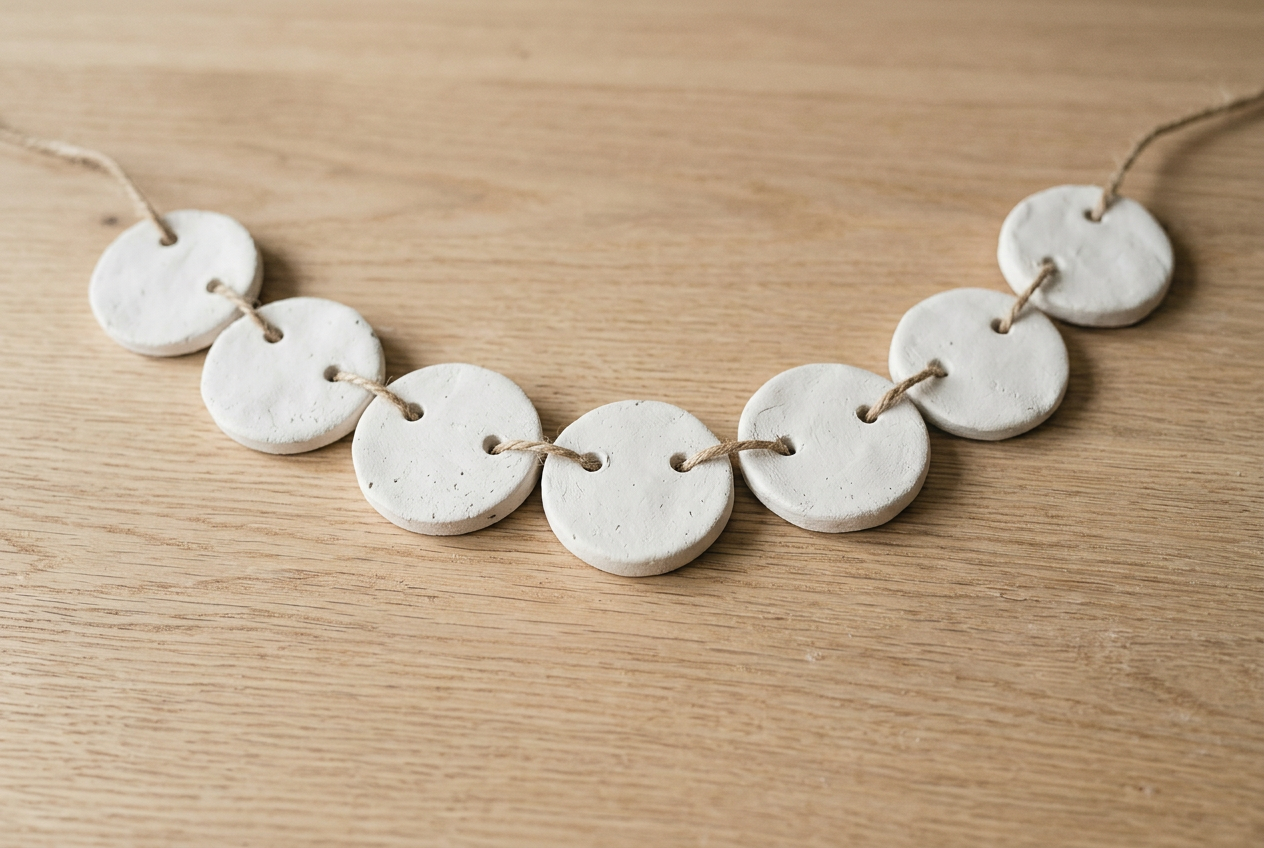
Two holes per disc, not one. A single hole lets each disc spin and hang crooked; two holes an centimetre apart hold every disc square to the twine.
Pierce them while soft with a drinking straw, which cuts a clean round hole instead of pushing a ragged one.
Vary the spacing along the twine rather than measuring it out evenly. Even spacing reads as machine-made bunting.
20Drawer knobs
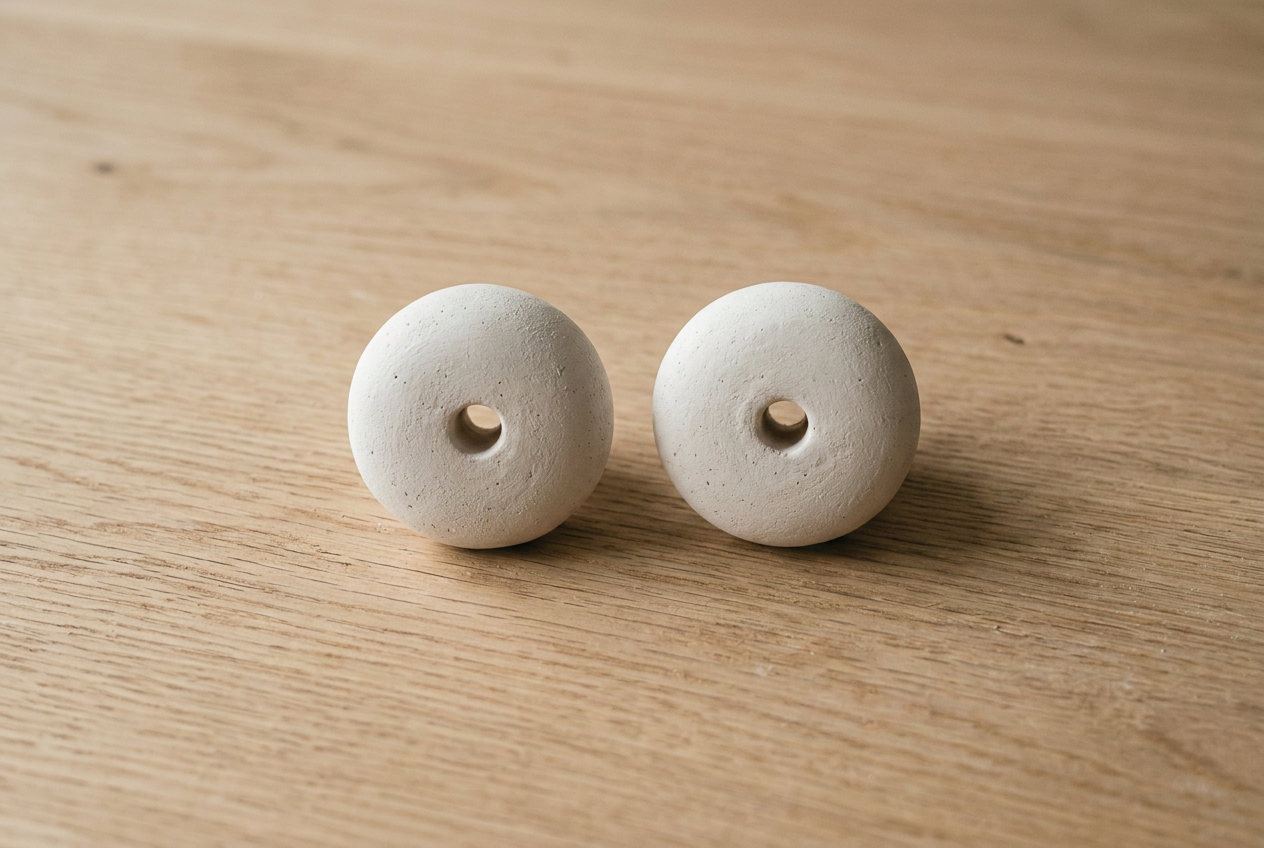
A knob takes a pull every day, so this only works over a bolt that runs right through it. The clay is decoration around a fixing, not the fixing itself.
Form the clay around the bolt while soft, then withdraw it before drying so the hole does not seize.
Four centimetres is about the limit. Larger knobs are heavy enough to loosen themselves over a year of use.
21Texture stamps for other projects
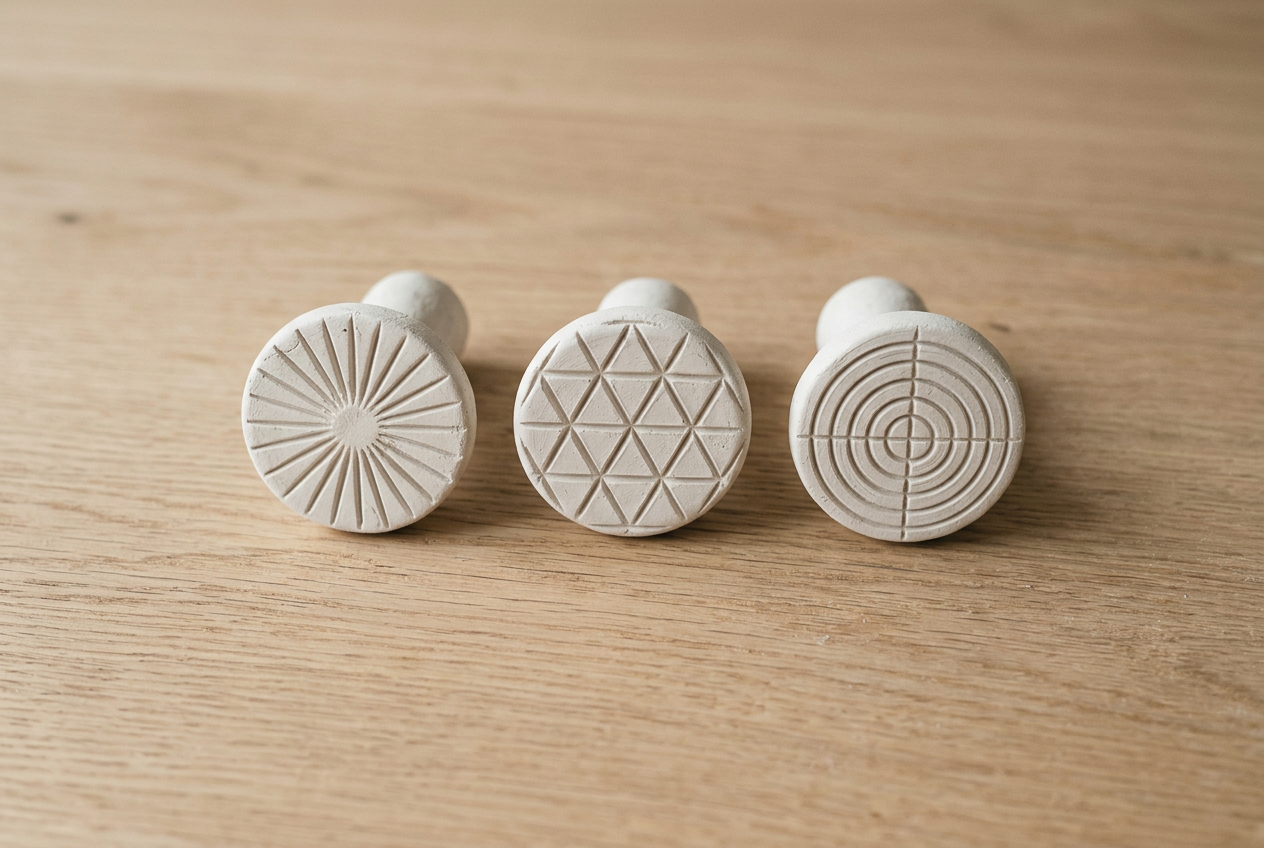
The one item here that makes everything else better. Carve a pattern into a small disc, dry it hard, and press it into future work.
Carve deeper than feels right. Shallow carving prints as a smudge once the stamp is pressed into soft clay.
Seal the face. An unsealed stamp sticks to wet clay and tears the impression as it lifts.
22A paperweight with a flat base
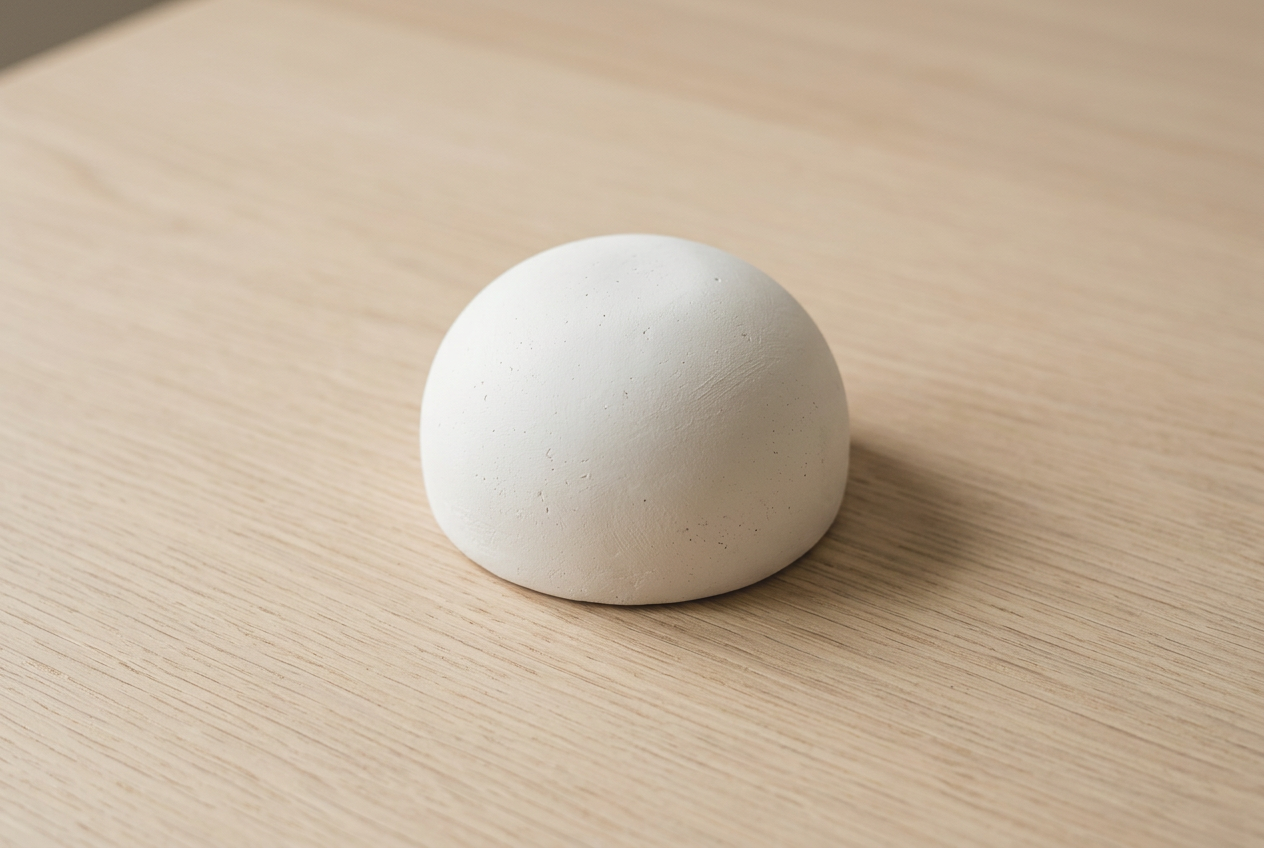
Solid clay this thick usually cracks, so hollow it from underneath and leave a wall about 12mm all round. It still has the weight, and it dries without splitting.
Sand the base dead flat on a sheet of paper laid on a table. Anything less and it rocks.
Fill the hollow with a little sand and a plug of clay if it comes out lighter than it should.
23An air plant holder
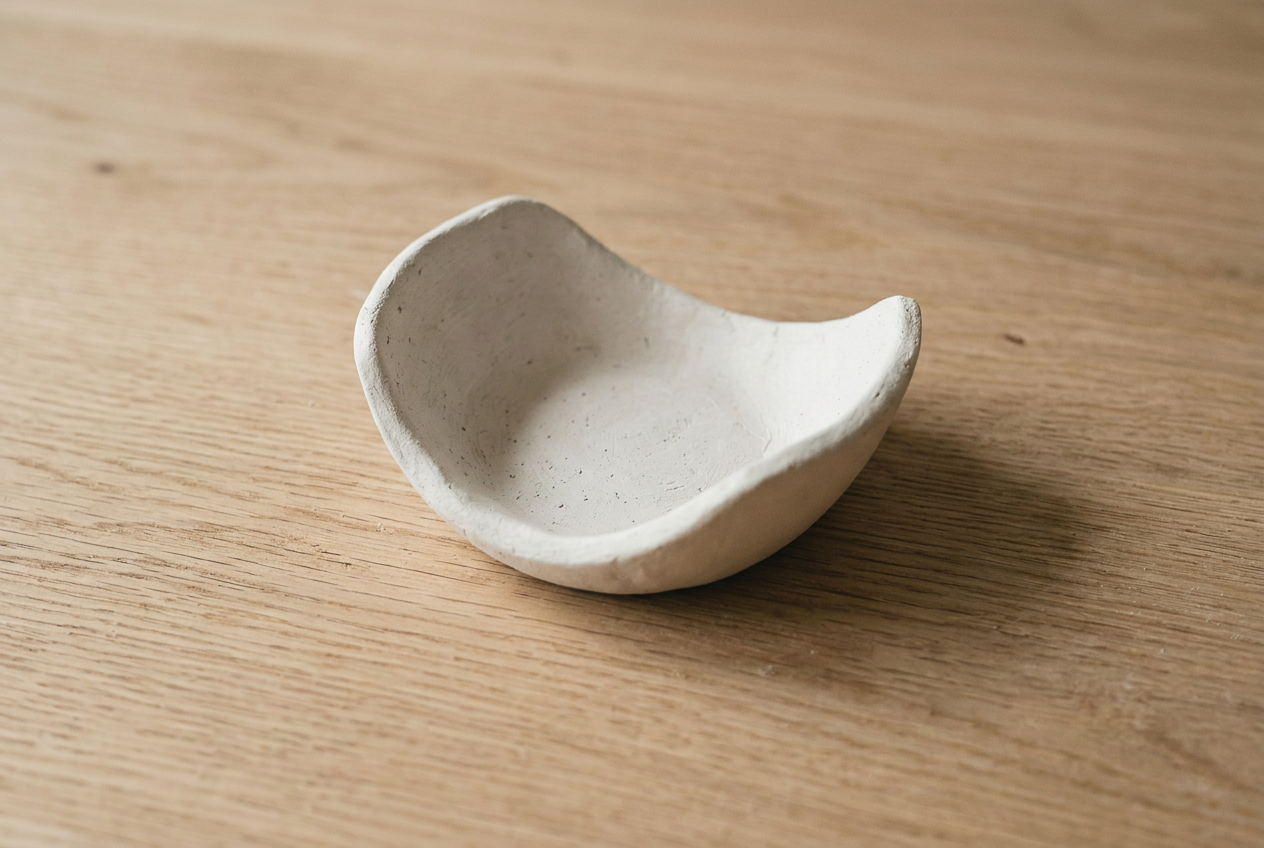
Air plants need airflow underneath, so this is a cradle rather than a cup. Open the walls out and keep the base narrow.
Nothing gets watered in here, which makes it one of the few plant-adjacent uses air dry clay is genuinely suited to.
Dry it over a crumpled ball of foil so the curve holds its shape while the walls stiffen.
24Wall hooks
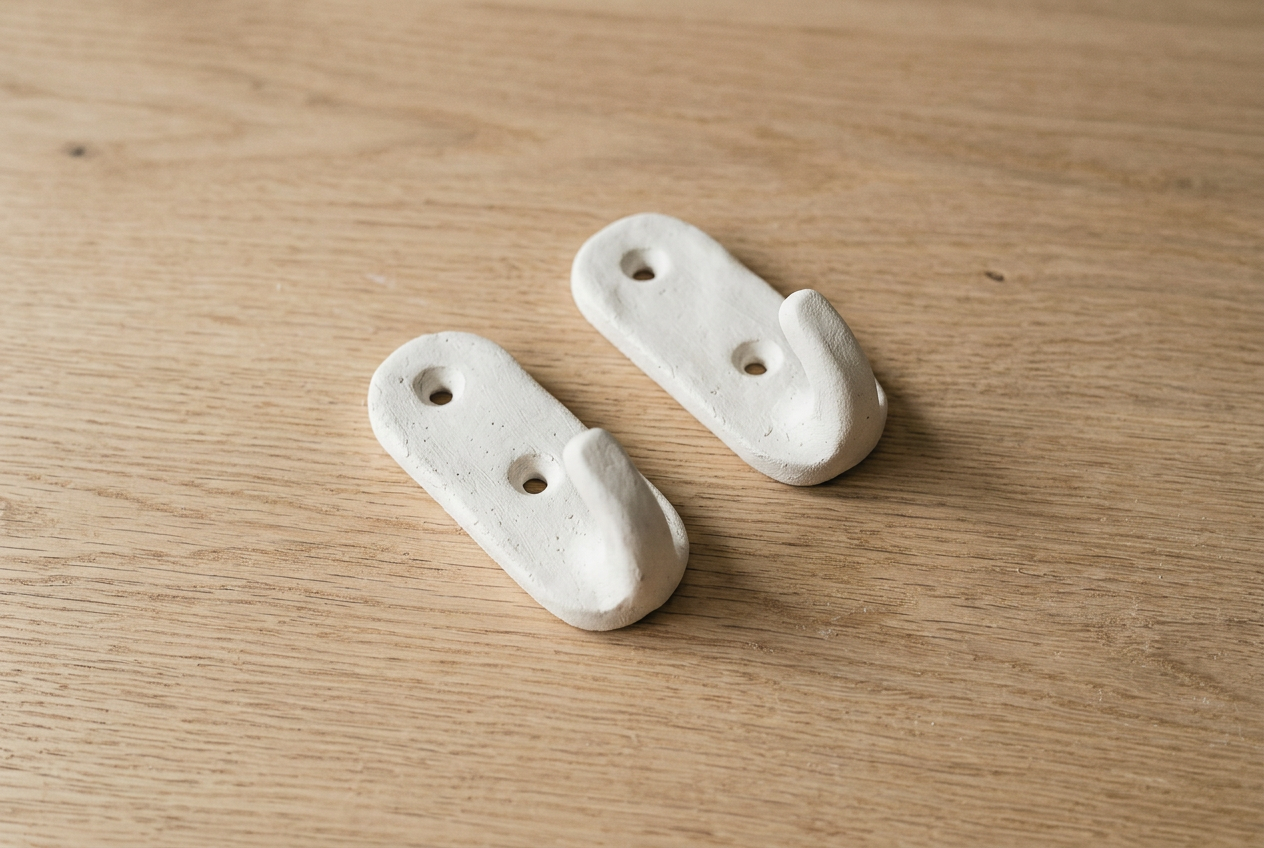
For a scarf or a tea towel, not for a coat. Air dry clay has no tensile strength worth relying on and a loaded hook snaps at the curve.
Two screw holes, countersunk, so the plate pulls flat to the wall. One hole lets it rotate.
Thicken the curve where it meets the plate. That corner is where every failure happens.
25Mini mushrooms
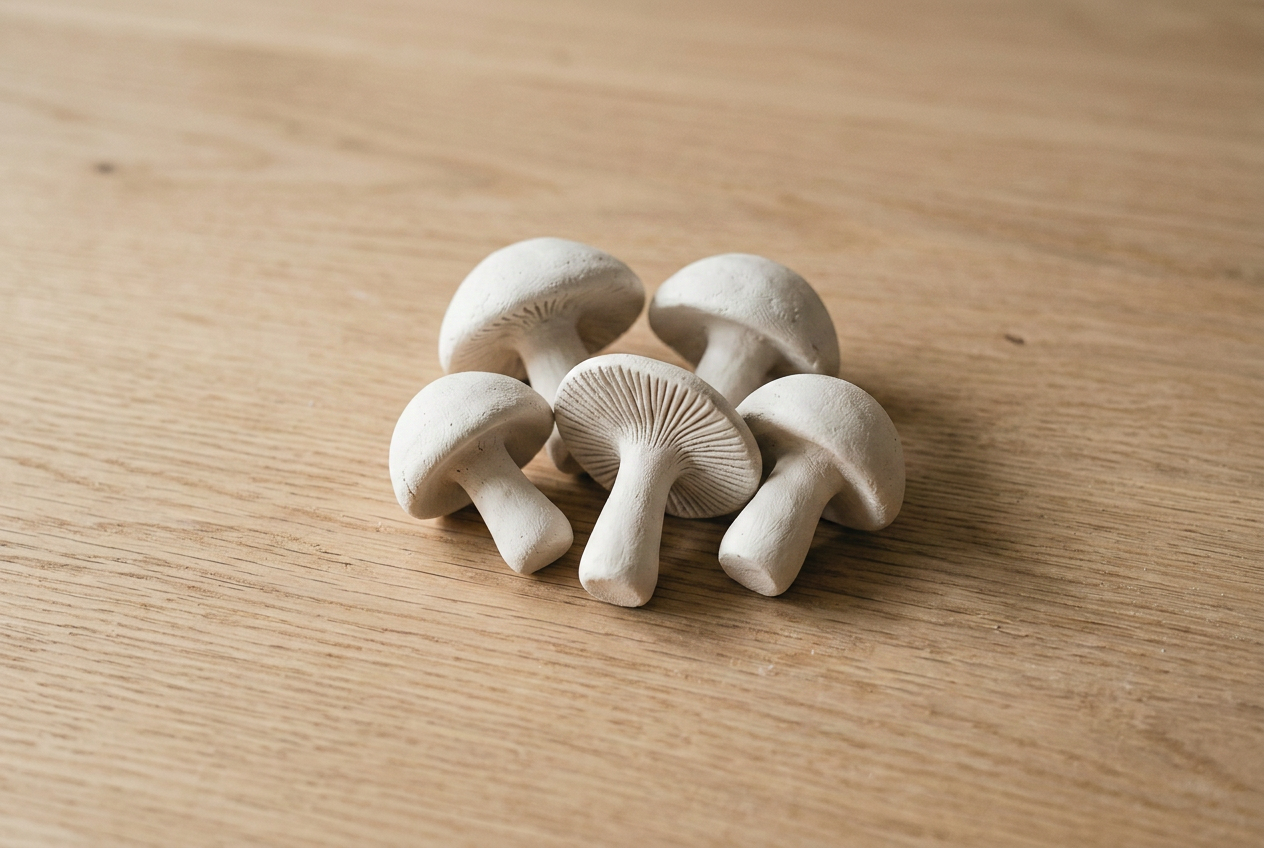
Pure decoration and by far the most saved thing on this list, which says something about what people actually want to make.
Score the gills under the cap even though almost nobody will see them. They catch a shadow and that is what stops the mushroom reading as a blob on a stick.
Make them in odd numbers at three different heights. A matched pair looks like a mistake.
Which of these are worth selling?
Roughly six of them, and they are not the ones people expect.
The pieces that sell are the ones with an obvious use and a low enough price to be an impulse: ring dishes, coasters, magnets, earrings, keyring charms. Somebody standing at a market stall can see what it is for in under a second and can justify eight pounds without thinking about it.
The pieces that do not sell are the ambitious ones. A trinket box takes four times as long as a ring dish and will not fetch four times the price, because a buyer prices it against a shop-bought box rather than against your afternoon.
There is also a durability problem worth being honest about. Anything that meets water regularly, like the soap dish or the spoon rest, will come back as a complaint eventually unless it is sealed far more thoroughly than a hobby piece needs to be. Polymer clay is the better material if selling is the goal, and the polymer clay hub covers where the line falls.
Batch matters more than the idea. Twelve identical ring dishes made in one session are worth more per hour than twelve different things, and they photograph as a collection rather than as a car boot sale.
What ruins an air dry clay project?
Four things, in the order they cost people the most work.
Drying too fast. A piece left near a radiator dries at the surface while the middle is still wet, and the outside shrinks onto a core that has not moved. That is a crack, and it appears overnight. Slow it down: cover loosely for the first day.
Drying on one side. Anything flat curls if only its top face meets air. A wire rack solves it for small work.
Skipping the sanding. Bone-dry clay sands beautifully at 400 grit and the difference is not subtle. Wet-sanding is worse than useless here, since the water softens the surface back into mud.
Sealing badly, or not at all. Unsealed air dry clay absorbs everything and softens in contact with water. Two thin coats beat one thick one, and the underside counts. The finishing hub goes through which sealers hold up, and troubleshooting covers rescuing a piece that has already cracked.
Frequently asked questions
What is the easiest air dry clay idea to start with?
A ring dish draped over an upturned bowl. It takes about four minutes of shaping, it has no thin points to snap, and it dries in two days.
How thick should air dry clay be?
Between 5mm and 12mm for almost everything. Thinner than 5mm snaps at narrow points; thicker than 12mm cracks because the outside shrinks while the middle is still wet.
Can air dry clay hold water?
No. It softens in prolonged contact with water even when sealed, so vases hold a dried stem or a test tube rather than water directly.
Do air dry clay projects need sealing?
Anything handled or used does. Two thin coats beat one thick one, and the underside needs the same treatment as the top or damp gets in from below.
Which air dry clay ideas sell best?
The cheap, obviously useful ones: ring dishes, coasters, magnets, earrings and keyring charms. Ambitious pieces take longer without fetching proportionally more.