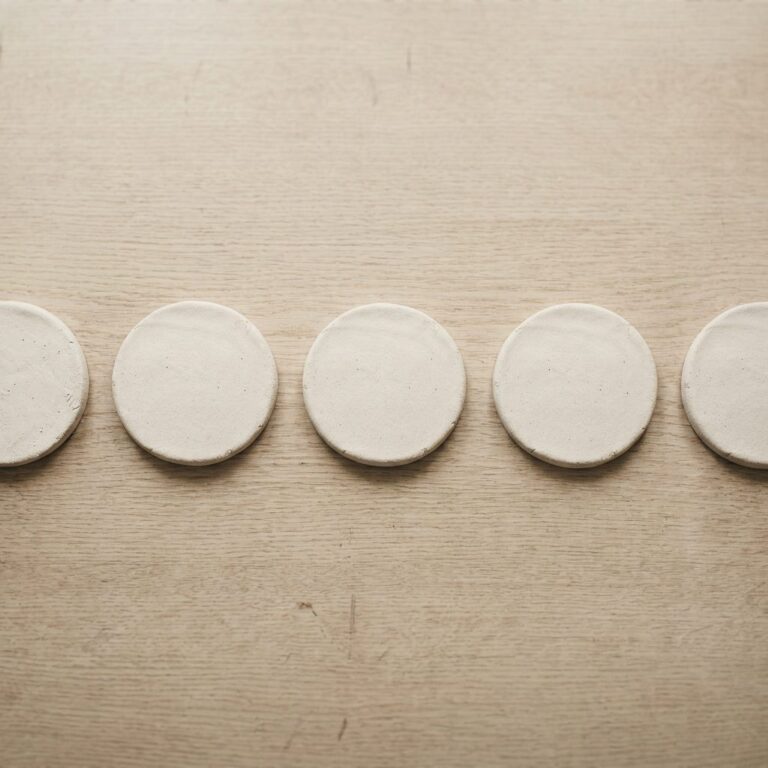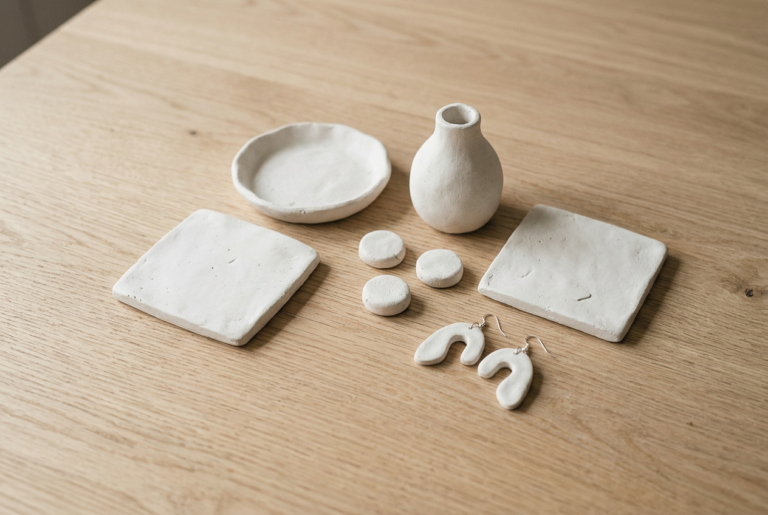

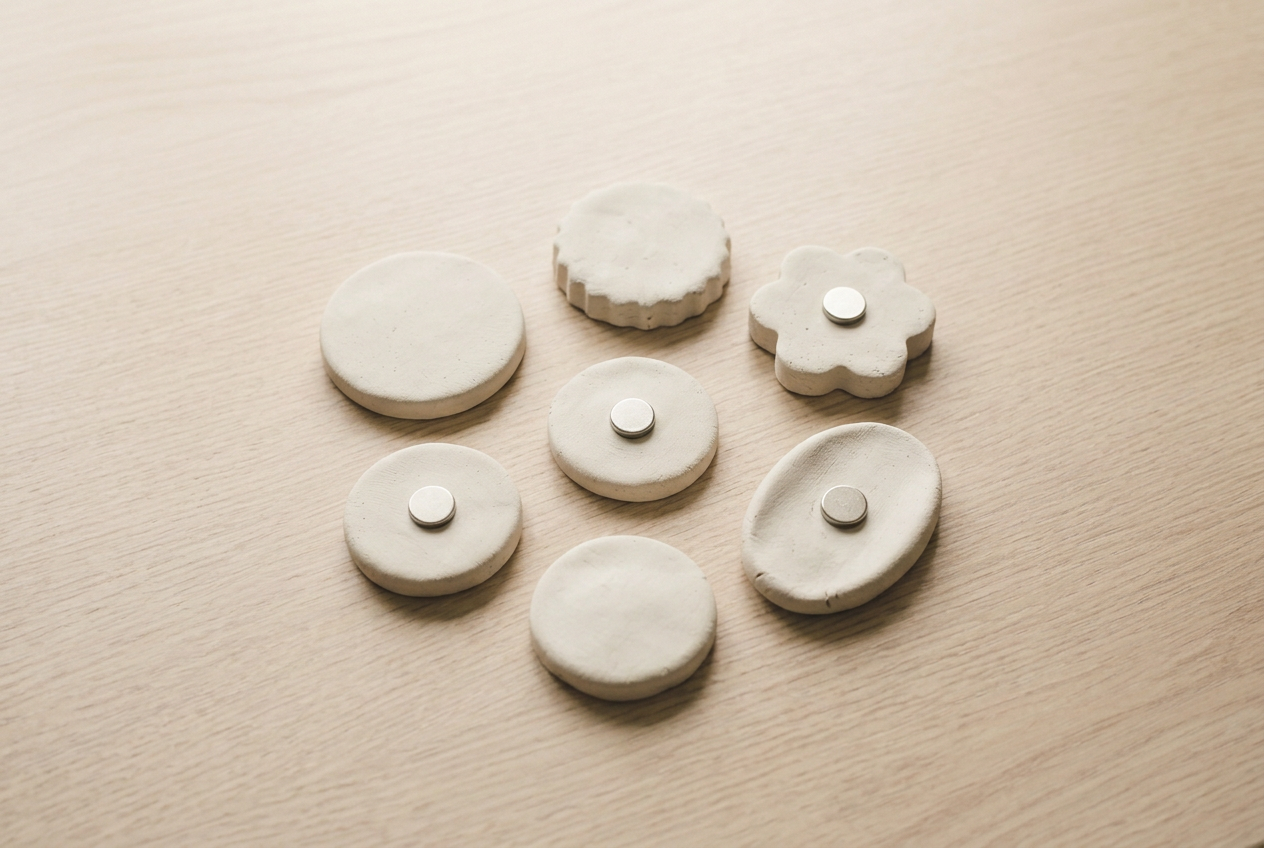
Air dry clay magnets are a 6mm slab, a small cutter and a disc magnet. The step that decides whether they hold is pressing a shallow recess into the back while the clay is soft, so the magnet sits flush against the fridge rather than a few millimetres off it.
Air dry clay magnets are the fastest project on this site: a 6mm slab, a small cutter, and a magnet glued into a recess. The recess is the part worth doing properly.
A magnet stuck flat onto the back sits the clay a few millimetres off the fridge, so it wobbles, slides down under its own weight, and eventually knocks the magnet off. Pressed into a shallow well while the clay is soft, it sits flush and holds.
The air dry clay hub has the material basics, and these are a good use for the offcuts from anything in the home decor hub.
Materials
- Air dry clay, offcuts are ideal
- Small neodymium disc magnets, about 12mm
- Two-part epoxy or E6000 adhesive
- Matt acrylic sealer
Tools
- Rolling pin
- Two guide strips about 6mm thick
- Small cutters, 3cm to 5cm
- Damp sponge
- Fine sandpaper
- Soft flat brush
- Two flat boards and a heavy book
Twenty minutes of work, then two days of drying before they can be sealed and glued.
How do you make air dry clay magnets?
Roll a 6mm slab, cut small shapes, press a magnet lightly into the back of each to leave a shallow recess, dry them flat under a board for two days, then seal them and glue the magnets into the wells.
1Set out what you need
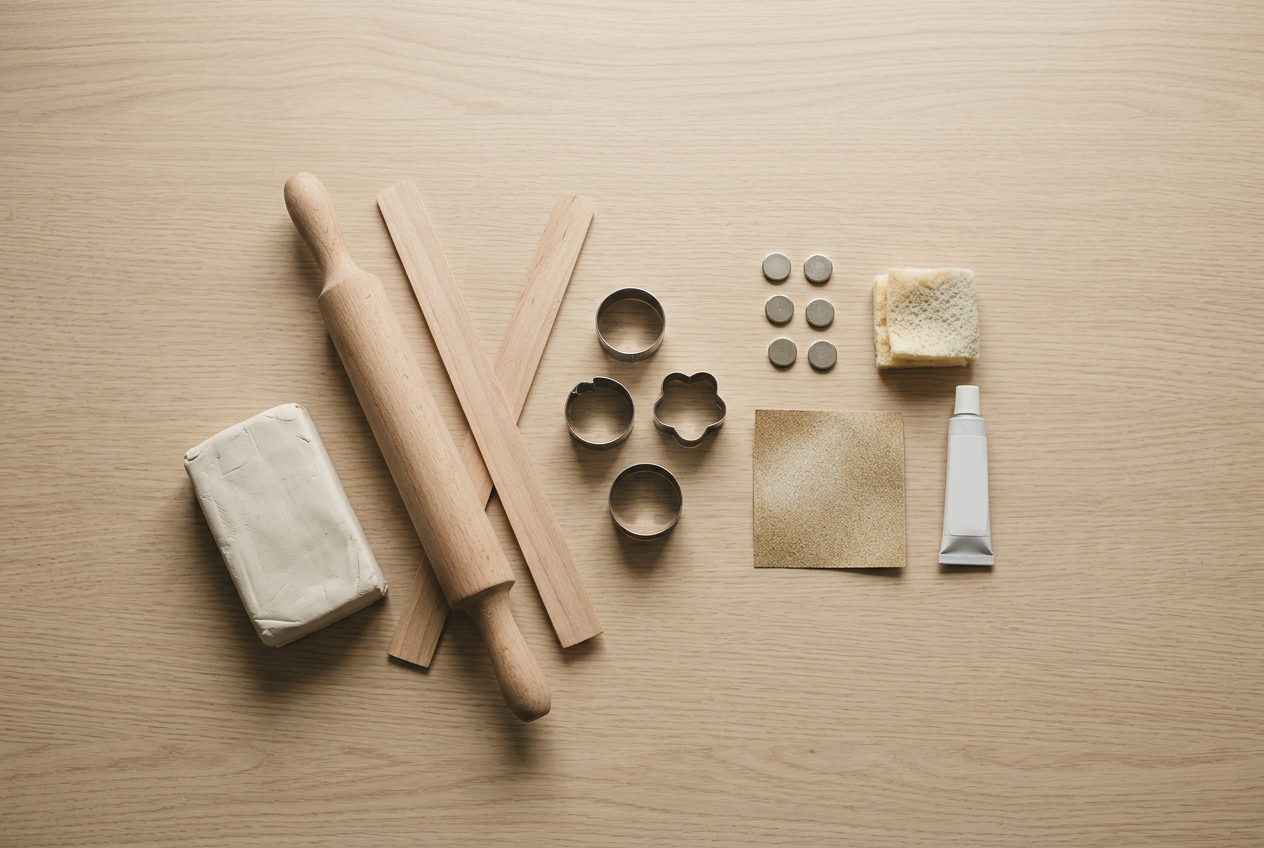
Buy the magnets before you cut anything. Their diameter decides how small your shapes can be: a 12mm magnet needs a shape of at least 3cm across, or the well takes up the whole back and weakens it.
Neodymium discs rather than the soft brown ferrite kind. They are stronger for their size, so a small one holds a clay shape and a couple of sheets of paper without help.
2Roll an even 6mm slab
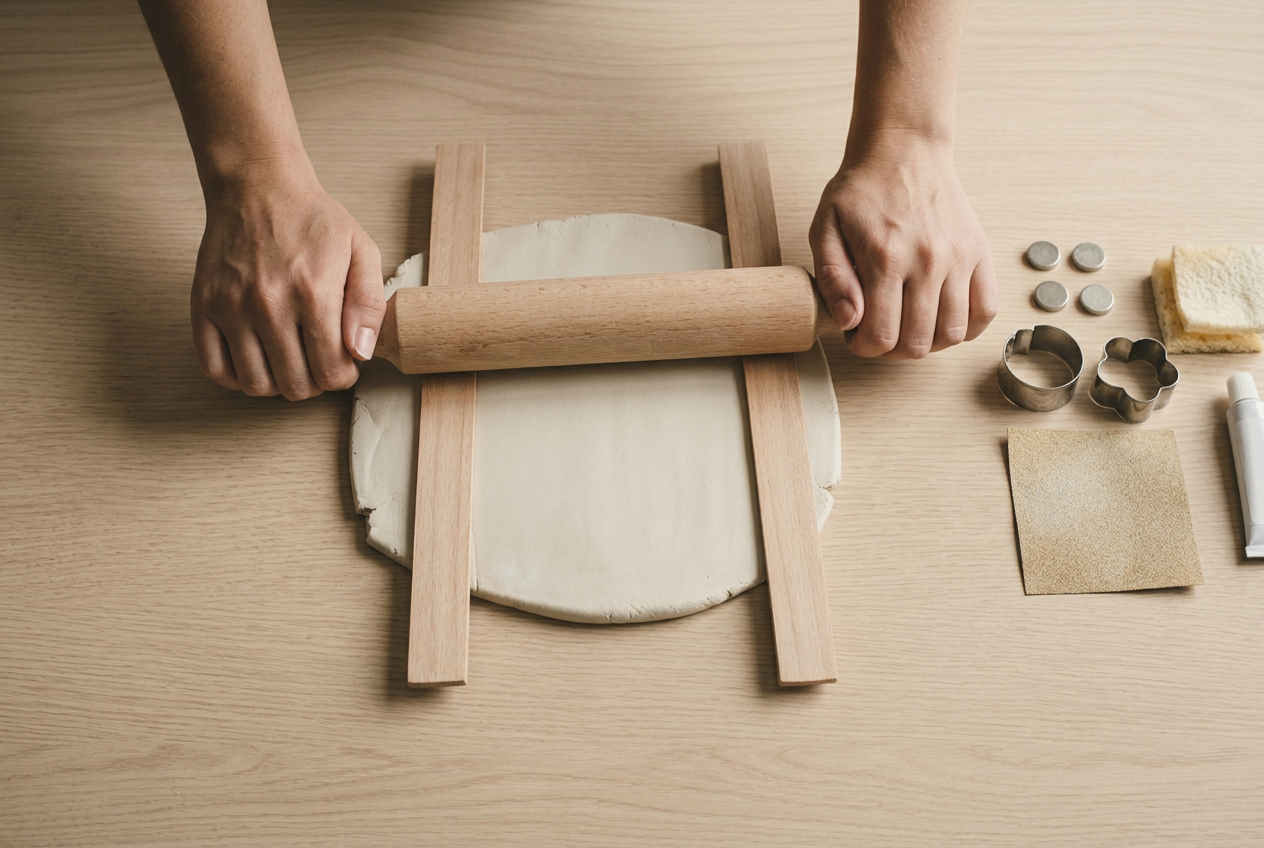
Six millimetres is the number. It is thick enough to take a magnet recess in the back without going through, and thin enough that the finished piece is not heavy.
Weight is the thing to watch on a magnet. A thick clay shape and a small magnet is a losing combination, and the piece slides down the fridge door over an afternoon.
Roll between guide strips and turn the slab a quarter turn every few passes so it spreads evenly rather than stretching one way.
3Cut the shapes
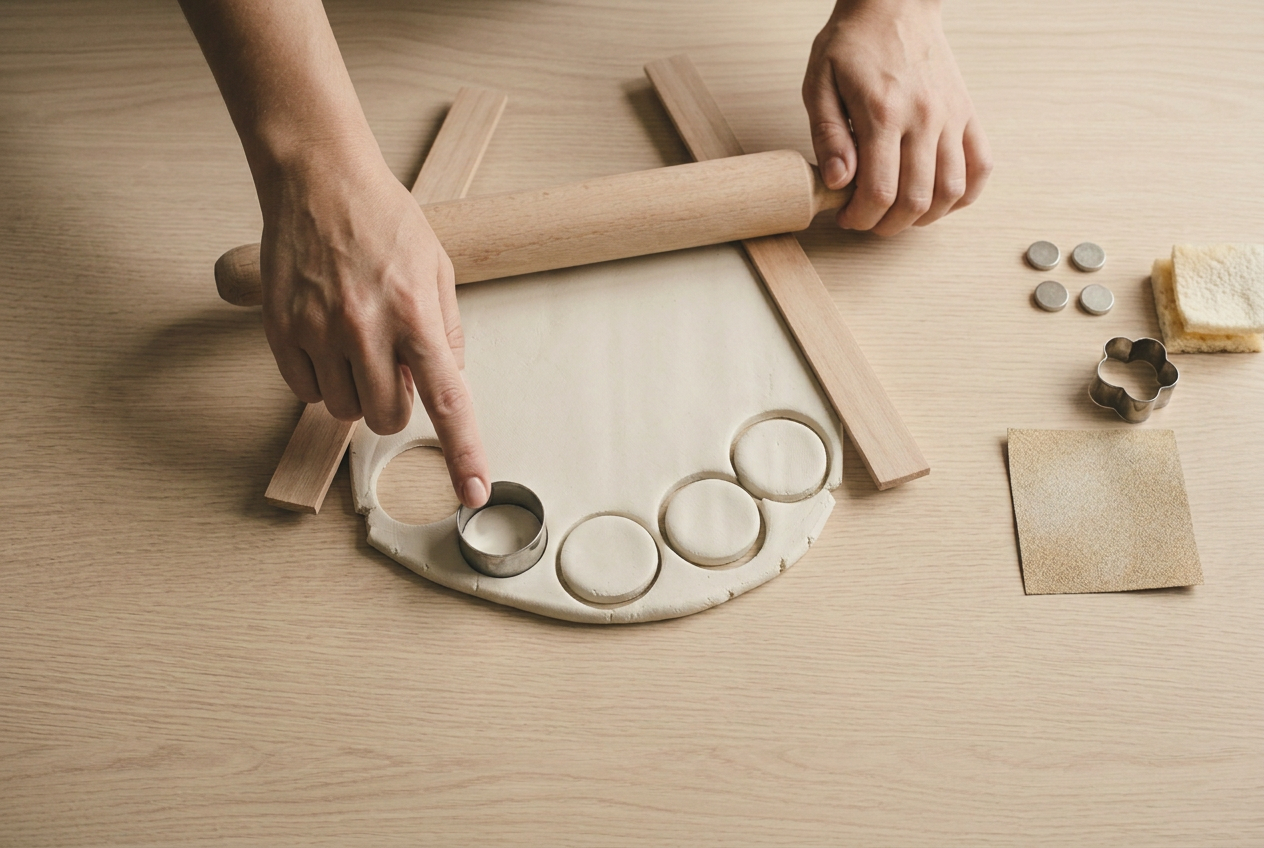
Press straight down and lift straight up, without twisting. On a shape this small the edge is most of what anyone sees from a metre away.
Keep them between 3cm and 5cm across. Smaller than 3cm and there is nowhere for the magnet to sit; larger than 5cm and one magnet will not hold the weight.
Sponge each cut edge while the clay is still soft. Thirty seconds now saves sanding six brittle little shapes later.
4Press the magnet recess
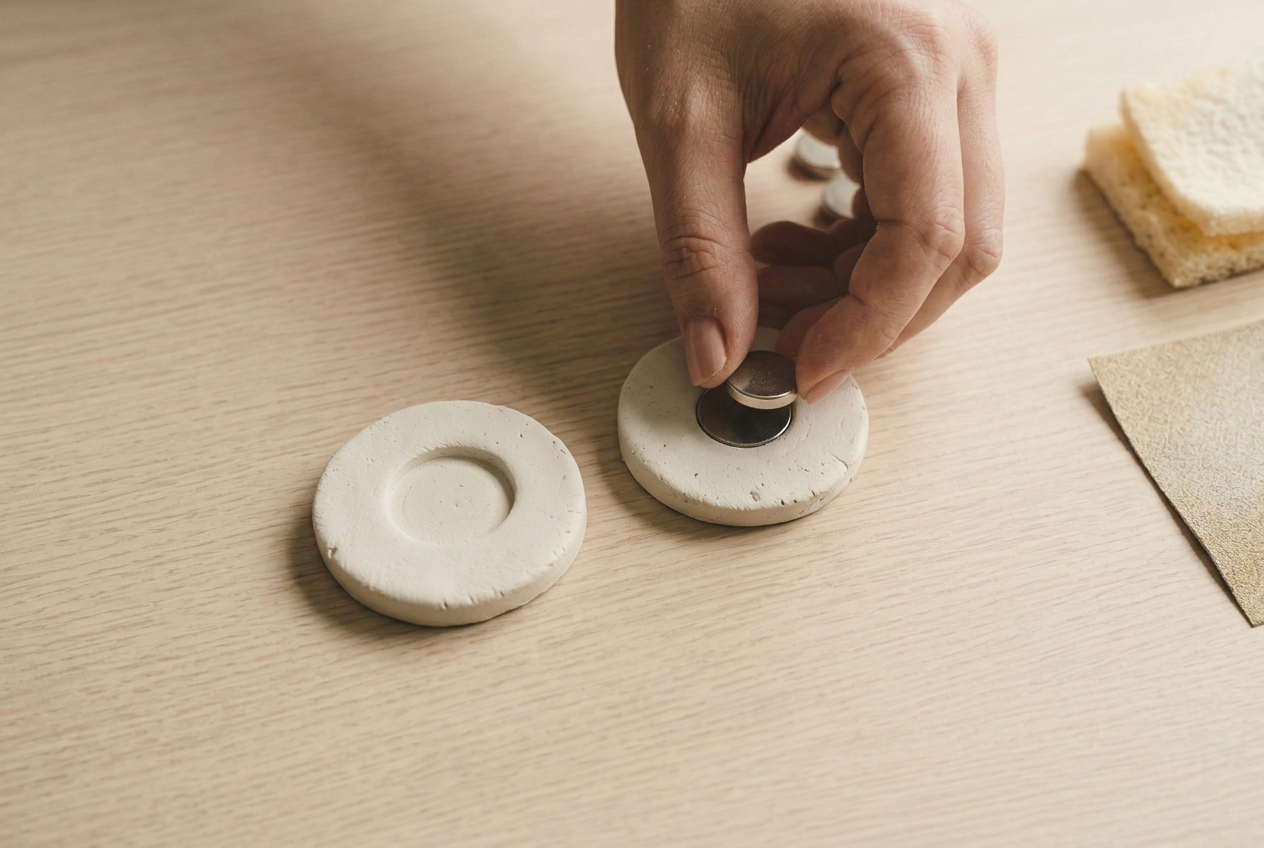
Turn each shape face down and press a magnet into the back, about halfway through the thickness, then lift it straight out again.
This is the step that makes the difference. A recess lets the magnet sit flush with the clay, so the magnetic face touches the fridge instead of hovering three millimetres away, and the holding power roughly doubles.
Do not press all the way through, and do not leave the magnet in place while it dries. The clay shrinks around it as it dries and either cracks the shape or traps the magnet at the wrong depth.
5Dry them flat under a board
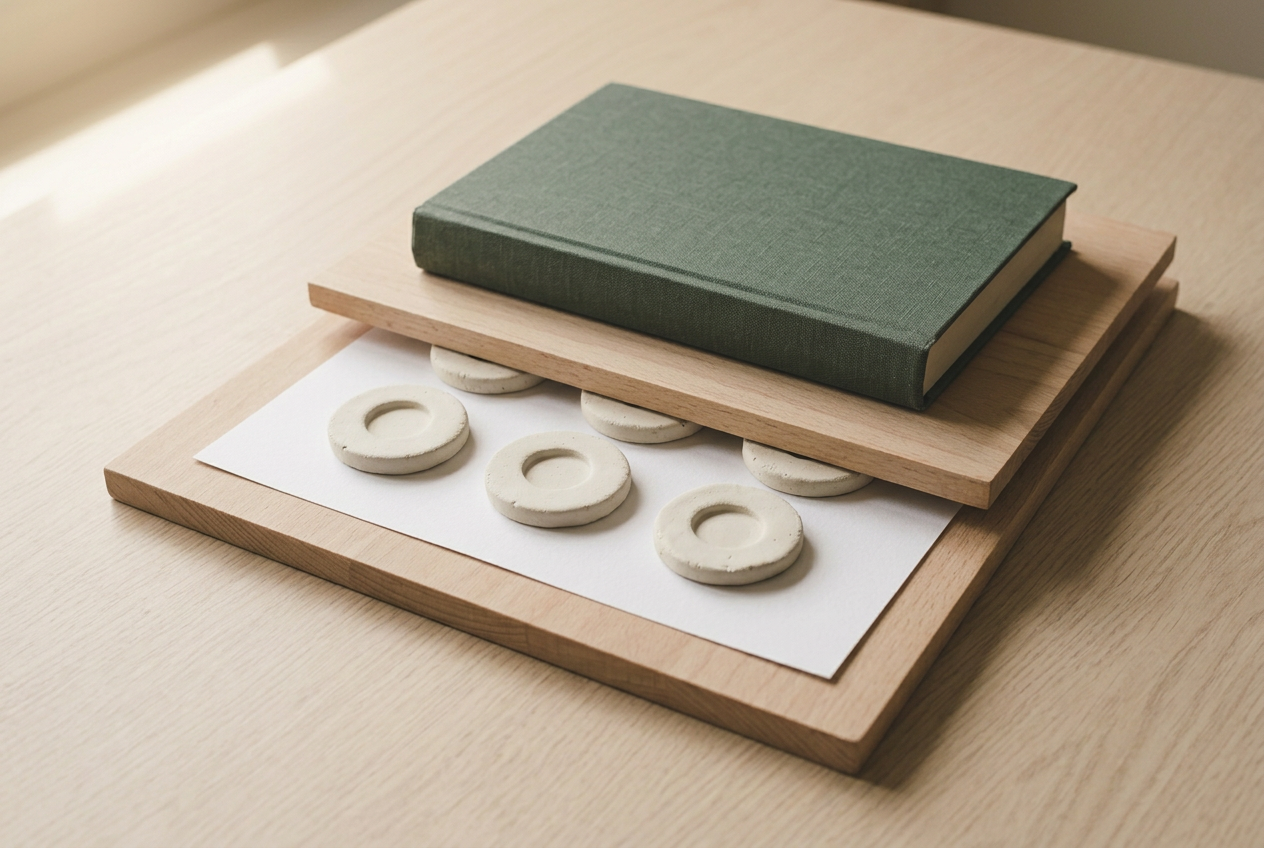
Lay them out on a board, cover with plain paper, add a second board and weight it. Two days for 6mm.
Small flat shapes curl faster than large ones, and a curled magnet only touches the fridge at one edge. The board is the whole reason they end up flat.
Lift the top board once a day and swap the paper if it feels damp. No radiators: forced drying warps a thin shape as reliably as leaving it loose.
6Seal, then glue the magnets in
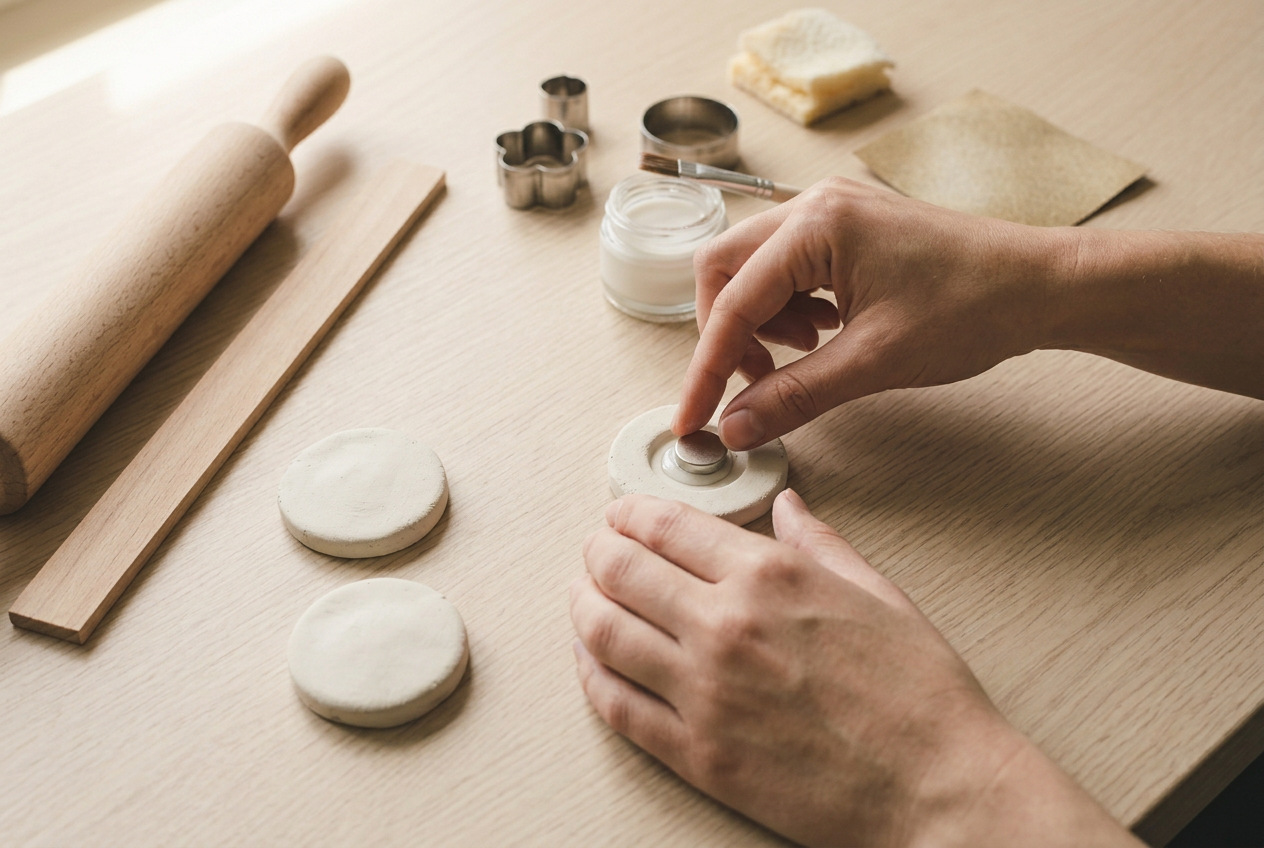
Seal the front, the edges and the back first, in two thin coats, and let them dry fully. Leave the inside of the recess bare: glue holds far better on raw clay than on a sealed surface. The finishing guides cover which sealers behave on porous clay.
Then a small bead of strong glue in each well and press the magnet home. Two-part epoxy or E6000, not superglue, which goes brittle and lets go the first time the magnet is pulled off the fridge sideways.
Leave them face down overnight before testing. A magnet that is pulled off while the glue is still green takes a chip of clay with it.
If it goes wrong
| Problem | Likely cause | How to fix it |
|---|---|---|
| The magnets slide down the fridge door | The magnet was glued flat onto the back, so it sits a few millimetres off the surface and loses most of its grip | Press a recess into the back next time so the magnet sits flush. On existing pieces, swap the magnet for a stronger neodymium disc of the same size. |
| The magnet fell off and took a chip of clay with it | It was pulled off the fridge before the glue had fully cured, or superglue was used | Leave glued pieces face down overnight before testing, and use two-part epoxy or E6000, which flex slightly rather than shattering. |
| A shape cracked around the magnet while drying | The magnet was left in the recess, so the clay shrank onto it with nowhere to go | Press the recess and then remove the magnet immediately. It only goes back in after the clay is fully dry and sealed. |
| The shapes dried curled rather than flat | They were left in open air, so the exposed face shrank ahead of the underside | Dry them between two boards under a weight, with plain paper against the clay, and swap the paper daily if it feels damp. |
Why do my clay magnets keep sliding down the fridge?
Because the magnet is not touching the door, or it is not strong enough for the weight.
A magnet glued flat onto the back holds the clay a few millimetres off the surface, and magnetic force drops away sharply with distance. Even a small gap can halve the grip. The recess fixes exactly this, which is why it is worth the extra minute while the clay is soft.
If it is already glued flat, the practical repair is a stronger magnet rather than a bigger one. A neodymium disc the same size as a ferrite one holds several times as much.
The other half is weight. A 6mm slab at 4cm across is about right for a single 12mm magnet. Anything thicker or wider wants two magnets, spaced apart rather than side by side, so the piece cannot pivot around a single point.
What glue holds a magnet to air dry clay?
Two-part epoxy first, E6000 second, and superglue not at all.
Epoxy fills the small gap between a flat magnet face and a slightly uneven clay well, and it stays put under the shearing force of a magnet being pulled sideways off a door. E6000 is nearly as strong and easier to use, with a little flex that absorbs knocks.
Superglue is the common choice and the common failure. It cures rigid and brittle, has no gap-filling ability at all, and the bond breaks the first time the magnet twists rather than lifts.
Whichever you use, glue onto raw clay rather than sealed clay, and rough the magnet face with sandpaper first. Plated metal is smooth, and smooth gives adhesive nothing to key into. The troubleshooting hub covers the rest of what fails after assembly.
Frequently asked questions
What size magnet do you need for a clay magnet?
A 12mm neodymium disc suits a shape 3cm to 5cm across at 6mm thick. Bigger or thicker pieces want two magnets set apart, so the piece cannot pivot on a single point.
Can you dry air dry clay with the magnet already in it?
No. The clay shrinks as it dries and the magnet does not, so the shape either cracks around it or grips it at the wrong depth. Press the well, remove the magnet, glue it in later.
Do you seal clay magnets before gluing?
Seal everything except the inside of the recess. Adhesive holds far better on raw porous clay than on a sealed surface, and the recess is never seen anyway.
How thick should clay fridge magnets be?
About 6mm. Thick enough to take a recess without breaking through, thin enough to stay light. Weight is the usual reason a magnet creeps down a door.