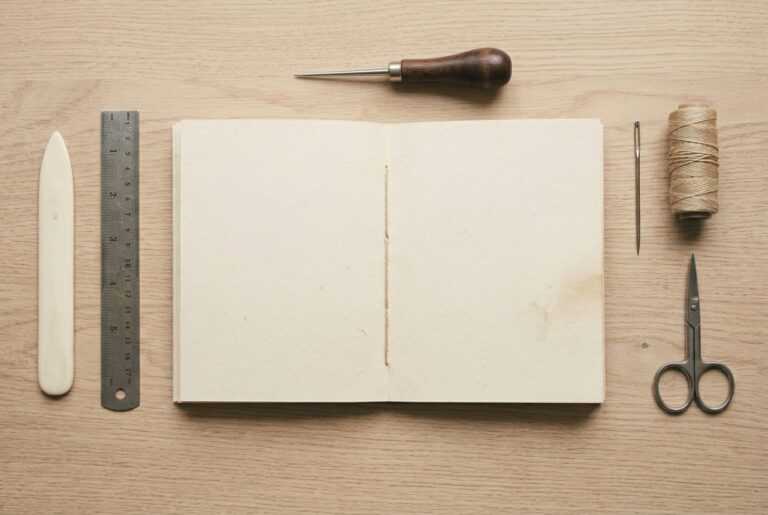

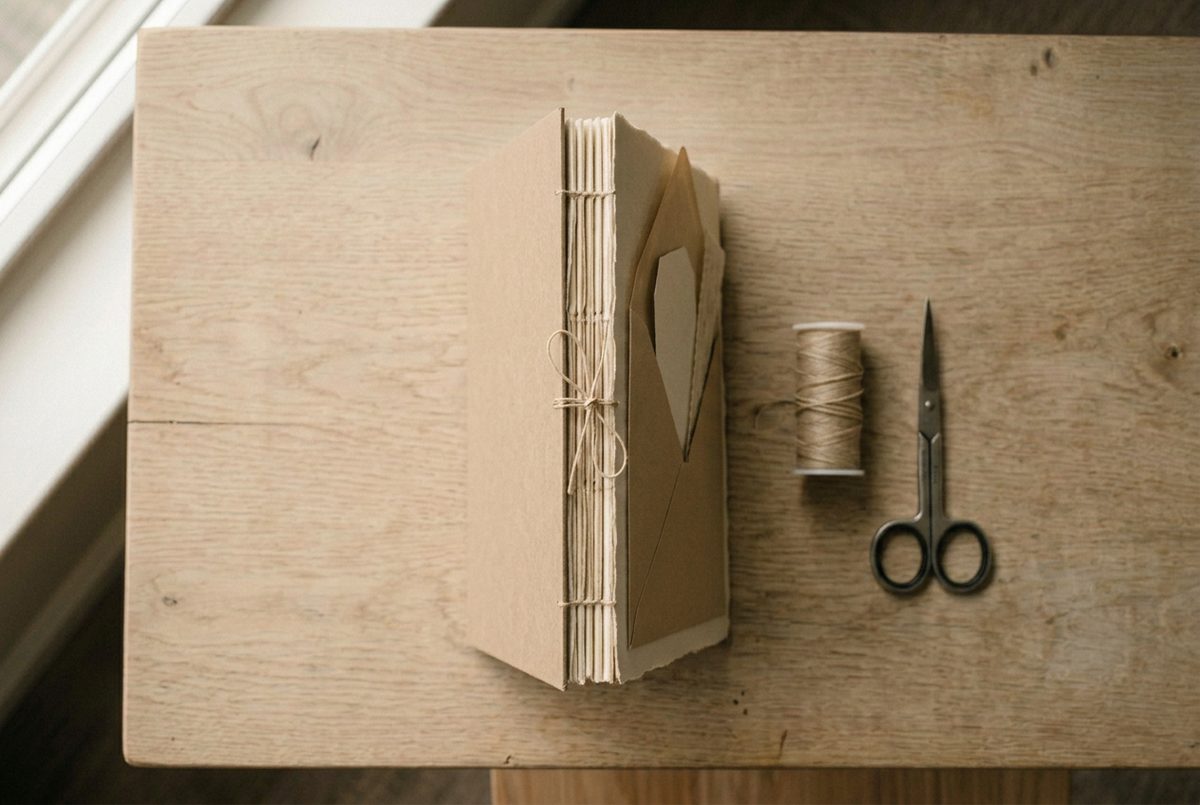
A junk journal is a handmade book bound from paper you already have: envelopes, packaging card, offcuts and plain scrap. Sort the paper by weight, fold it into small signatures, then stitch each one into a folded cover with a three-hole pamphlet stitch and no special equipment.
The appeal of a junk journal is that the materials cost nothing, and the thing that stops most people starting one is exactly the same fact. A drawer of saved paper does not look like a book, and there is no obvious first move.
The first move is sorting. Everything after that is folding and one row of stitches.
There is more on the craft as a whole in the junk journaling hub. This is the plain version: one small journal, no bookbinding equipment, nothing bought.
Materials
- About 20 sheets of assorted scrap paper
- Heavy kraft card, for the cover
- Plain envelopes, for pockets
- Natural waxed linen thread
- Strong tea, for staining
- Glue stick
Tools
- Bone folder, or the back of a spoon
- Small sharp scissors
- A large needle or awl
- A shallow tray, for tea-staining
- A baking tray, for drying sheets flat
Set aside about two hours, spread over two days if you tea-stain, since the stained sheets have to dry flat before they can be folded.
How do you make a junk journal?
Sort your paper by weight, fold it into small stacks called signatures, then stitch each stack into a folded cover through three pierced holes.
1Gather your papers
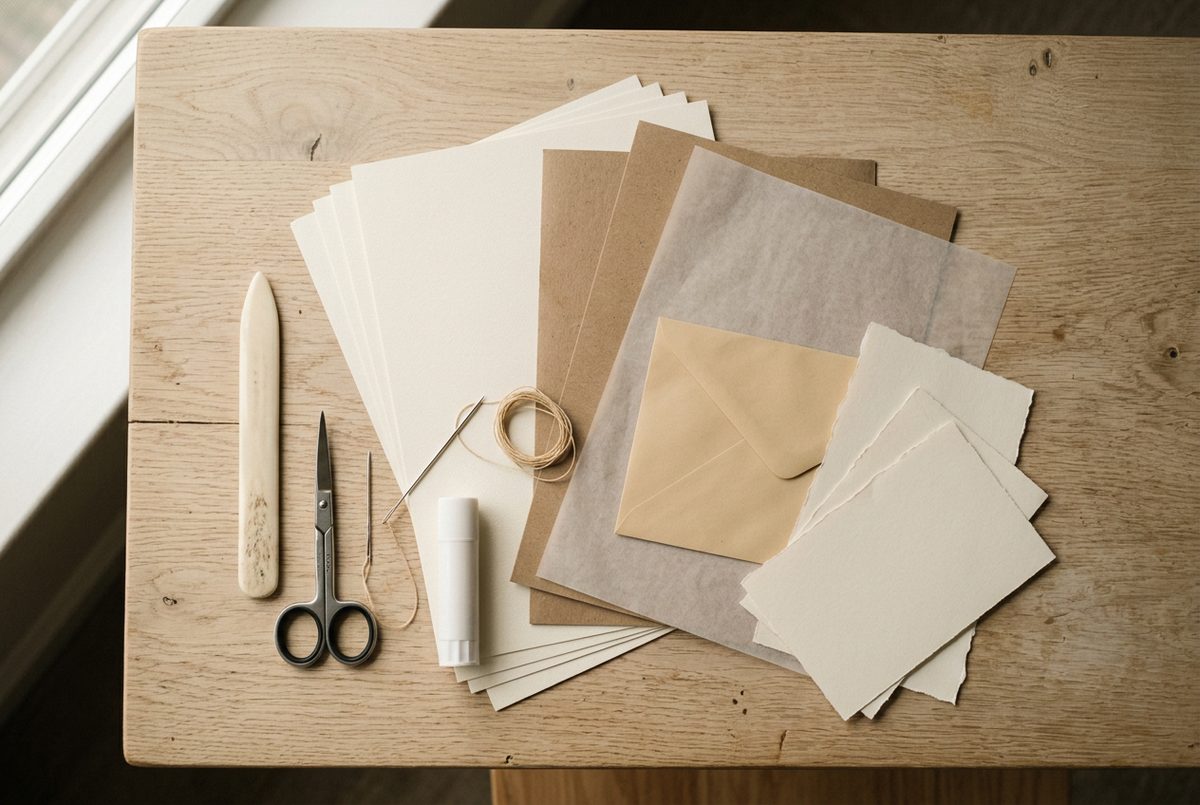
Collect more than you think you need. A finished journal of this size eats about twenty sheets, and you will reject a third of what you gather once you see it next to everything else.
Look for variety in weight rather than variety in colour. A journal made entirely of printer paper feels thin and uniform no matter how nice the colours are.
2Sort by weight
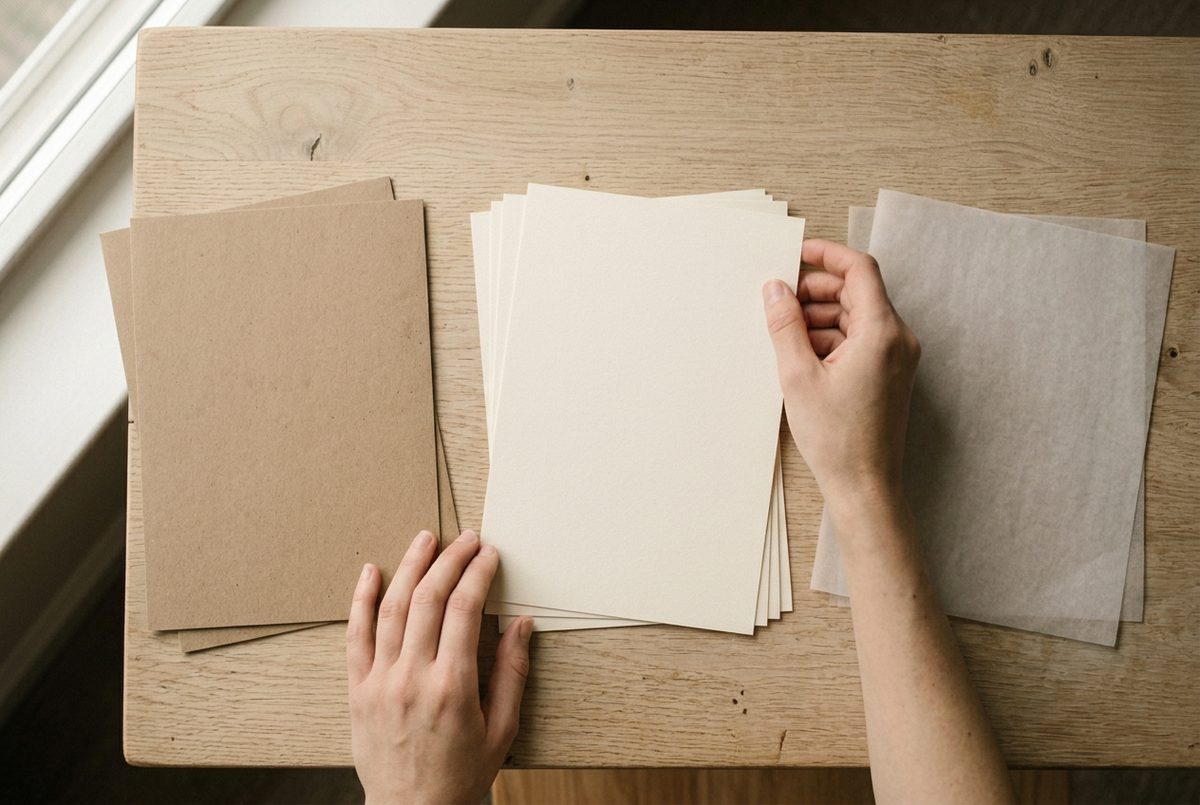
Three piles: heavy, medium, thin. This one decision does most of the work of making the finished thing feel considered rather than random.
Heavy sheets go on the outside of each stack and thin ones in the middle. Do it the other way round and the thin pages crease every time the journal is opened.
3Tea-stain the plain sheets

Brew tea about twice as strong as you would drink, let it cool, then lay the sheets in for two or three minutes. Longer does not make them darker; it just makes them fragile.
Lift them out flat on a baking tray and let them dry completely before you do anything else. Paper is at its weakest wet, and a sheet lifted by one corner will tear under its own weight.
4Fold into signatures
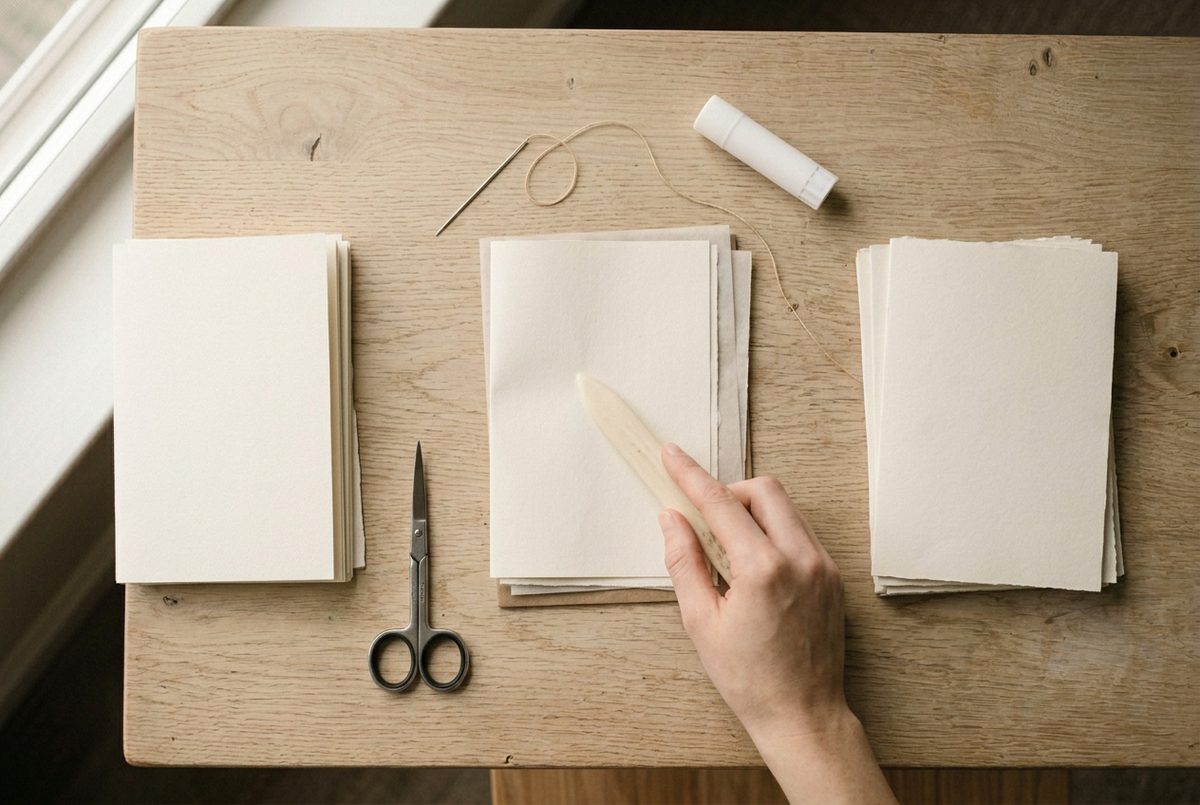
Take four or five sheets, stack them, fold the stack in half and crease hard along the fold. That folded stack is a signature, and three or four of them make a journal.
Fold the whole stack at once rather than folding sheets individually and nesting them afterwards. Folded together, the inner sheets sit slightly proud at the open edge, which is correct and gets trimmed flat at the end.
5Make the cover
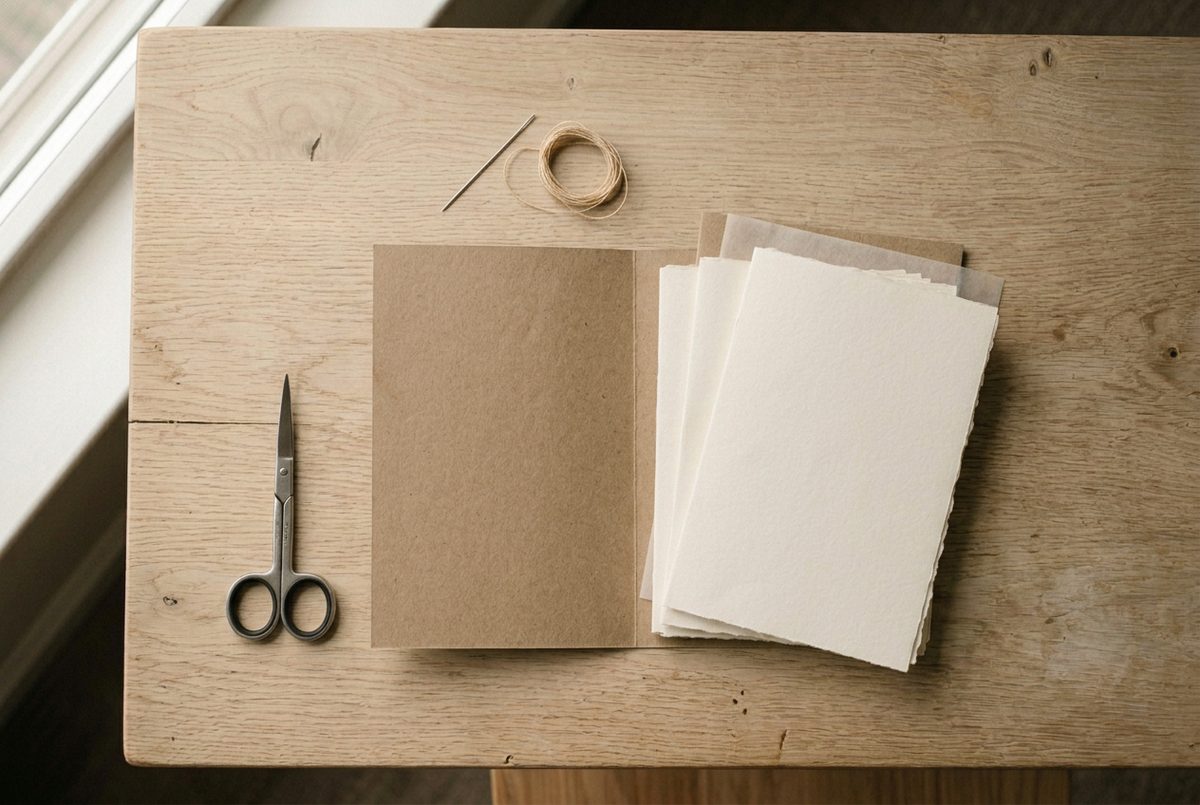
Cut the cover about a centimetre taller and wider than the folded signatures, so the pages sit protected inside rather than flush with the edge.
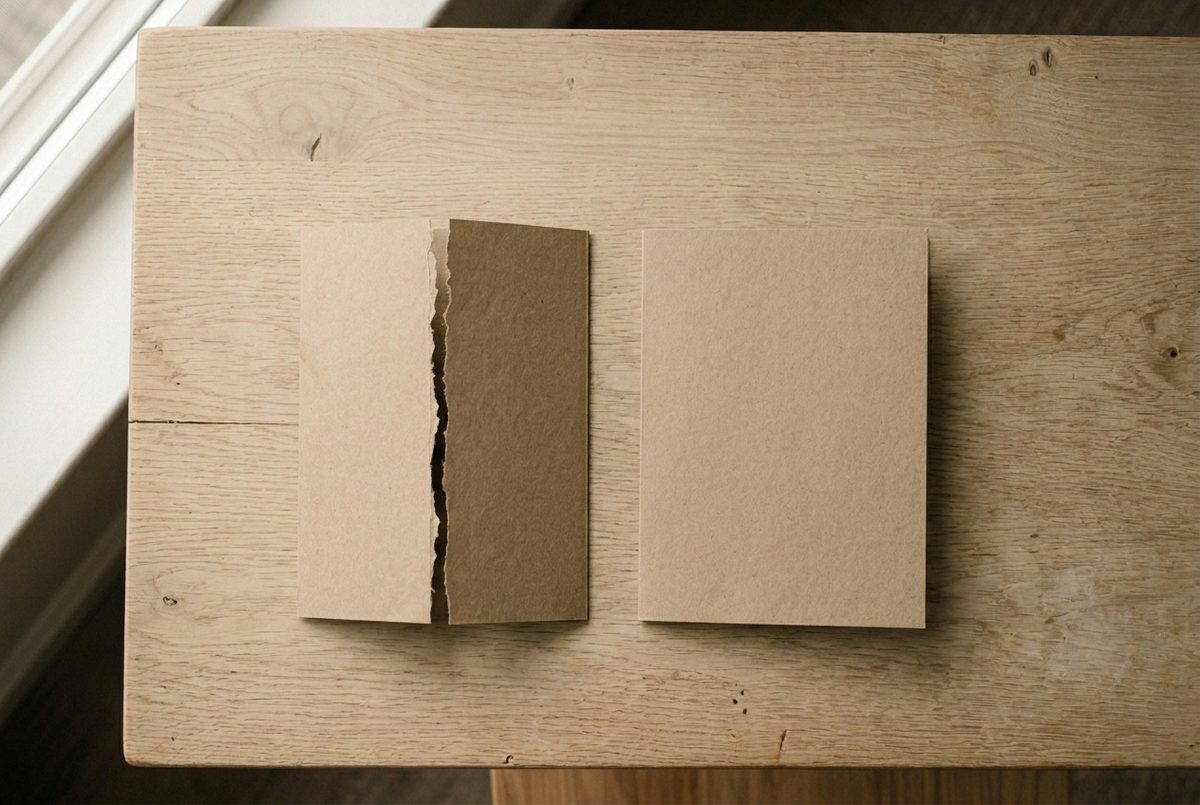
Score the fold line before you bend it. Heavy card folded without scoring cracks along the spine, and that crack is where the cover eventually separates.
6Stitch the binding
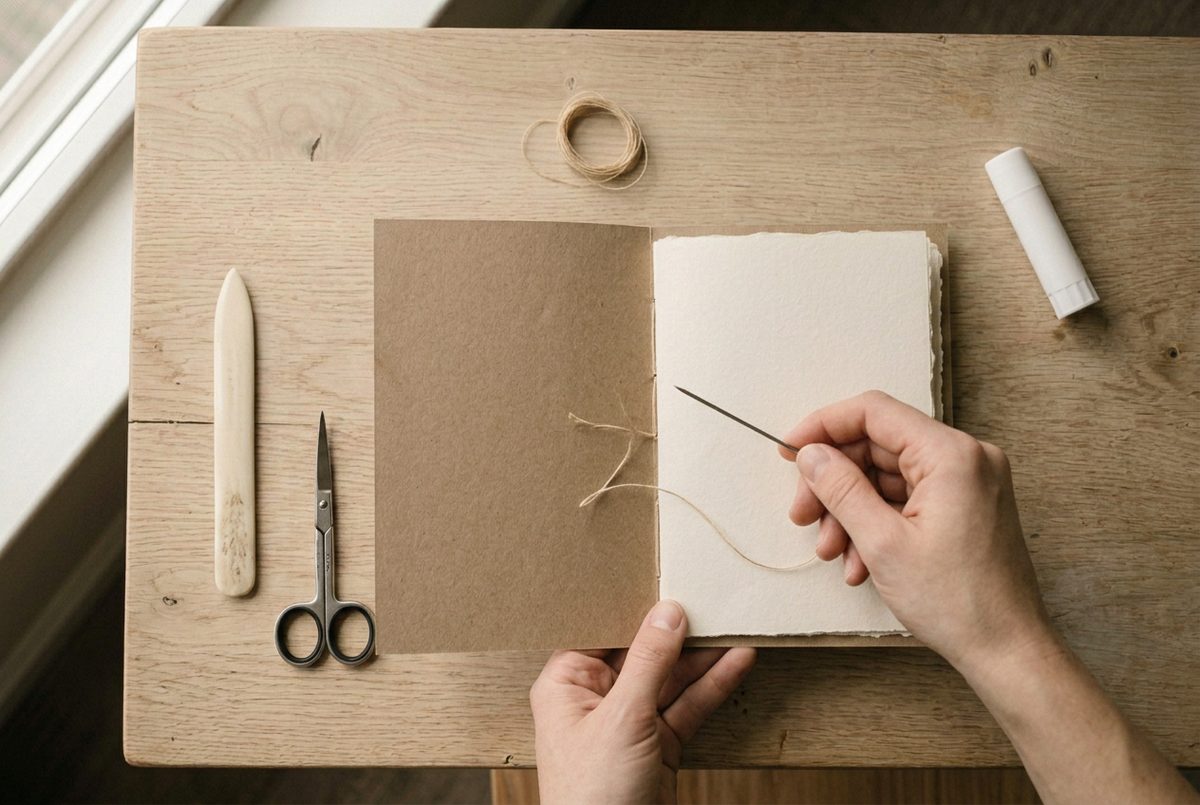
Pierce three holes through the spine fold: one at the centre, one about two centimetres from each end. Use an awl or a large needle against a folded scrap.
The stitch is simple. In through the middle from the outside, out through one end hole, along the outside to the far end hole, in, and back out through the middle. Tie the two ends around the long stitch and trim. Repeat for each signature.
7Add pockets and tuck spots
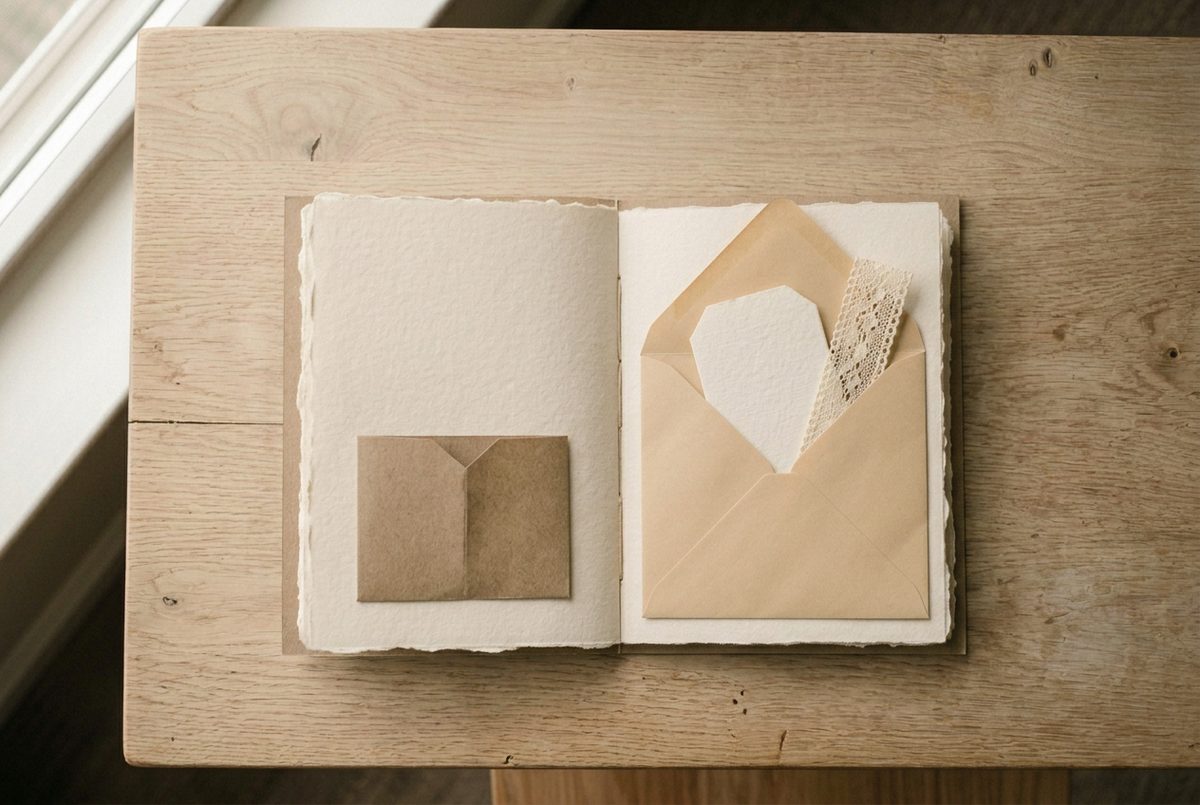
Glue an envelope flat to a page with its opening upward and you have a pocket. Fold a square of paper in half, glue the two side edges only, and you have another.
This is what separates a junk journal from a plain notebook. Leave some pages sparse and pockets empty, because the point is having somewhere to put things later. The pressed flowers section covers the most common thing people tuck into one.
Two covers below, cut from the same card. One was scored before folding and one was not.
If it goes wrong
| Problem | Likely cause | How to fix it |
|---|---|---|
| The journal will not close flat | Too many signatures for the width of the spine, or all the bulky pockets clustered in one part of the book | Four signatures of five sheets is about the limit for a folded cover. Split it into two thinner journals, and spread pockets through the book rather than grouping them. |
| The cover cracked along the spine | Heavy card folded without scoring it first | Score every fold with a bone folder or the back of a knife before bending. A cracked spine can be reinforced by gluing a strip of cloth tape along the inside. |
| The tea-stained pages went brittle and tore | Left soaking far too long, or lifted out by one corner while still wet | Two or three minutes is enough; longer does not darken the paper, only weakens it. Slide a baking tray underneath to lift sheets out flat and dry them without handling. |
| The thread cut through the spine fold | Ordinary sewing cotton, or holes pierced too close to the edge of the fold | Use waxed linen thread, which is thicker and slides instead of sawing. Pierce holes at least two centimetres in from each end of the spine. |
Where do you find junk journal materials?
Almost all of it passes through the house already. Plain envelopes, kraft packaging card, tissue from parcels, paper carrier bags, brown tape backing, offcuts of wrapping paper, the stiff card that comes behind a photo frame.
Outside the house, charity shops sell damaged hardbacks for very little, and a damaged book is only useful for its cover boards and endpapers anyway. Print shops will often give away guillotine offcuts, which come in stacks of clean, unusual sizes.
The one thing worth buying is thread. Waxed linen costs a few pounds, lasts through a dozen journals, and does not saw through the spine fold the way ordinary sewing cotton does.
Resist collecting for months before starting. Twenty sheets is a journal. Two hundred sheets is a drawer, and a drawer is where most junk journals stay.
Why does my junk journal not close flat?
Almost always too many signatures for the spine, or bulky additions all stacked in the same part of the book.
A folded cover has a fixed spine width. Four signatures of five sheets is about the limit before the front edge splays open and the covers stop meeting. Make two thinner journals instead of one fat one.
If the bulk is coming from pockets and tucked-in pieces rather than paper count, spread them through the journal rather than clustering them. Alternate a page with a pocket and a page without, and the thickness distributes instead of wedging the book open at one point. The troubleshooting section has more on repairs once a spine has already split.
Frequently asked questions
What paper can you use in a junk journal?
Almost anything that folds. Envelopes, kraft packaging card, tissue from parcels, paper carrier bags, wrapping paper offcuts and the stiff card behind a photo frame all work. Variety in weight matters more than variety in colour.
Do you need special tools to bind a junk journal?
No. A large needle, scissors and a glue stick cover it, and the back of a spoon works instead of a bone folder. The one thing worth buying is waxed linen thread, which will not saw through the spine fold.
How many pages should a junk journal have?
Three or four signatures of four to five sheets each, so roughly twenty sheets or forty pages. Beyond that a folded cover splays open at the front edge and stops closing flat.
How do you tea-stain paper for a junk journal?
Brew tea about twice as strong as you would drink, let it cool, and lay sheets in a shallow tray for two or three minutes. Lift them out flat onto a baking tray and let them dry completely before folding.

Save this for later